
A burger can be thin and crisp at the edges, tall enough to need two hands, filled with melted cheese, built from beans, or served as a two-bite slider. That variety is why a search for the types of burgers rarely has a one-line answer. Burgers are grouped by patty ingredient, cooking method, toppings, size and regional style, and each build behaves differently after it leaves the kitchen.
For restaurants, food trucks and delivery kitchens, knowing the burger style is also a packaging decision. A flat smash burger does not need the same box depth as a double-patty burger, while a juicy stuffed burger needs stronger grease control. At Packaging NextGen, we connect food knowledge with practical packaging choices so that the bun, patty, toppings and presentation stay in better condition during service.
What Are the Main Types of Burgers?
Burger types are commonly classified by the protein or base used for the patty, the way it is cooked, the number of patties, the toppings and the region that popularized the style. Common examples include hamburgers, cheeseburgers, smash burgers, bacon burgers, stuffed burgers, sliders, chicken burgers, fish burgers, veggie burgers and plant-based burgers.
The table below gives a fast overview:
| Burger type | Main feature | Common packaging need |
| Classic hamburger | Beef patty with simple toppings | Standard grease-resistant box |
| Smash burger | Thin patty with crisp edges | Low-profile vented box |
| Double burger | Two patties and added height | Deep box with crush clearance |
| Juicy Lucy | Cheese inside the patty | Leak-resistant paperboard |
| Slider | Small, snack-size burger | Divider or multi-burger tray |
| Chicken burger | Grilled or fried chicken | Steam and crispness control |
| Veggie burger | Vegetable, grain or bean patty | Moisture control |
| Gourmet burger | Premium meat and layered toppings | Reinforced custom-size box |
Packaging NextGen groups the main varieties below by patty, preparation and regional identity, giving readers a clearer answer than a list of burger names alone.
What Separates One Burger Style From Another?
The word “burger” describes more than ground beef in a bun. Modern hamburger types may use poultry, seafood, mushrooms, beans or plant-based proteins. Cooking can also create a category: a smash burger is pressed onto a hot griddle, while a thick pub-style patty is left unflattened. Toppings, size and regional traditions create further varieties.
20 Popular Types of Burgers
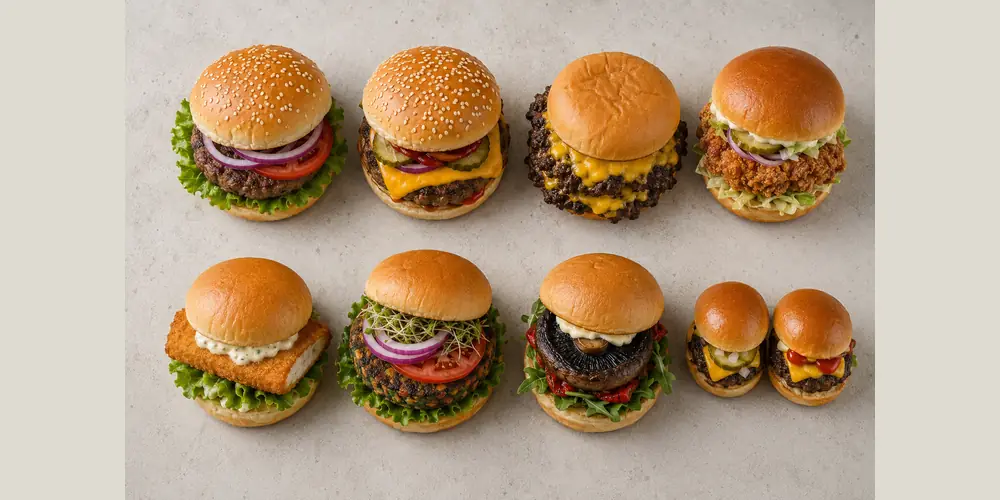
1. Classic Hamburger
The classic hamburger starts with a seasoned ground-beef patty inside a sliced bun. Lettuce, tomato, onion, pickles, ketchup and mustard are common additions. Its simple structure makes it the baseline for comparing other types of hamburgers.
2. Cheeseburger
A cheeseburger adds cheese to the beef patty. American cheese melts evenly, while cheddar, Swiss, pepper jack and blue cheese create different flavors. Melted cheese adds oil and moisture, so the box or wrapper needs a suitable grease barrier.
3. Bacon Cheeseburger
This style adds bacon to a cheeseburger, often with barbecue sauce, fried onions or jalapeños. Bacon pieces and extra sauce can shift during transport. A secure clamshell with grease resistance is a practical takeaway choice.
4. Smash Burger
A smash burger begins as ground beef pressed firmly onto a hot griddle, creating a thin patty with browned, crisp edges. It is often served with cheese, pickles, onions and sauce. A shallow vented box helps release steam.
5. Double or Triple Burger
Double and triple burgers stack two or three patties, often with cheese between them. Their added height needs a deeper box that does not press the top bun, plus a base that stays firm when lifted.
6. Juicy Lucy or Stuffed Burger
The Juicy Lucy places cheese inside the meat instead of on top. Other stuffed burgers may contain mushrooms or peppers. Leakage is the main packaging concern, making tight corners, food-safe barriers and a stable base useful.
7. Slider
Sliders are small burgers served individually or in sets. They may contain beef, chicken, pulled meat or vegetarian patties. A divided tray or fitted multi-pack stops them from sliding, turning or pressing against one another.
8. Wagyu Burger
A Wagyu burger uses highly marbled beef, often with simple toppings. Because the patty may release more grease than a lean burger, its packaging needs suitable food-contact material, a dependable barrier and enough ventilation.
9. Chicken Burger
Chicken burgers may use a ground patty, grilled breast or breaded fried chicken. Fried chicken needs airflow to protect its coating, while grilled chicken may need greater moisture retention. Packaging should match the preparation.
10. Turkey Burger
A turkey burger uses ground turkey cooked on a grill, griddle or pan. Thickness and moisture vary, so restaurants should test the finished burger inside the box instead of selecting packaging from patty diameter alone.
11. Fish Burger
Fish burgers may use a fillet, breaded portion or patty made from salmon, tuna or cod. Breaded fish can lose crispness when steam is trapped, making controlled ventilation important for delivery.
12. Bison Burger
A bison burger, often called a buffalo burger in the United States, replaces beef with ground bison. Box selection should follow the finished height, toppings and sauces, not the meat name.
13. Lamb Burger
Lamb burgers pair well with feta, cucumber, pickled onion, herbs and yogurt sauces. Sauce-heavy versions need reliable corner closure and moisture resistance. A fitted carton also reduces topping movement.
14. Veggie Burger
“Veggie burger” covers patties made with vegetables, grains, legumes or seeds. Texture can range from firm to delicate. The package should support the patty and manage moisture without trapping enough steam to wet the bun.
15. Black Bean Burger
Black bean burgers combine beans with seasonings and binders. Because their patties may break more easily than beef, the burger should fit the box closely enough to limit movement without squeezing the bun.
16. Portobello Mushroom Burger
A grilled portobello mushroom cap can replace the meat patty. Mushrooms may release moisture after cooking, making an absorbent liner or ventilated paperboard container useful for short takeaway journeys.
17. Plant-Based or Vegan Burger
Plant-based burgers may use pea protein, soy, wheat, beans or fungi. Vegan versions also avoid dairy, egg-based sauce and animal ingredients in the bun. A vegan burger does not automatically mean its box is compostable or recyclable.
18. Oklahoma Onion Burger
This regional style presses thinly sliced onions into the beef on the griddle. Cheese, pickles and mustard are common additions. A low-profile grease-resistant carton suits the flat build, while vents help manage steam.
19. California Burger
The meaning of a California burger changes by region, but avocado is common in modern versions. Bacon, lettuce, tomato and cheese may also appear. A stable base and enough headroom help keep soft toppings in place.
20. Teriyaki Burger
A teriyaki burger uses a sweet and savory glaze on beef, chicken or a plant-based patty. Sticky sauce can transfer to the container, so coated paperboard or a suitable greaseproof wrap helps keep the outside easier to handle.
Matching Burger Packaging to the Menu
The best burger packaging starts with the finished menu item. Pack several burgers during normal service and inspect them after the expected holding or delivery time. Check whether the bun stays intact, sauces remain contained and the carton keeps its shape.
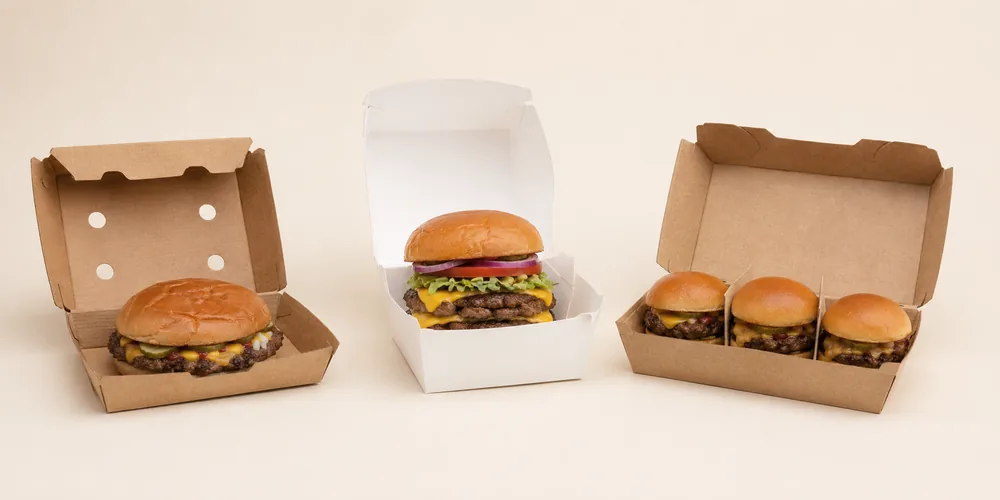
Height and Crush Protection
Measure the widest and tallest points after adding all toppings. The lid should close without touching the bun, but excessive empty space can allow movement.
Steam and Ventilation
Hot patties and fried coatings release steam. A sealed box may trap moisture and soften the bun or breading. Vents release part of that steam, but excessive airflow may cause heat loss.
Grease and Moisture Resistance
Cheese, meat juices and sauces can weaken untreated boards. Burger packaging boxes may use food-contact-suitable coatings, liners or grease-resistant papers. Ask what creates the barrier and whether it suits the food, heat and holding time.
The FDA reports that grease-proofing substances containing certain PFAS are no longer being sold for food-packaging use in the United States. Buyers should request current material documentation instead of relying on vague “safe” or “green” wording.
Movement, Stacking and Tamper Evidence
Delivery orders face movement, stacking and longer hold times. Locking tabs keep the lid closed, dividers separate menu items and tamper-evident labels can show whether an order was opened. Packaging NextGen recommends testing the full meal inside the normal delivery bag.
Common Materials for Burger Boxes
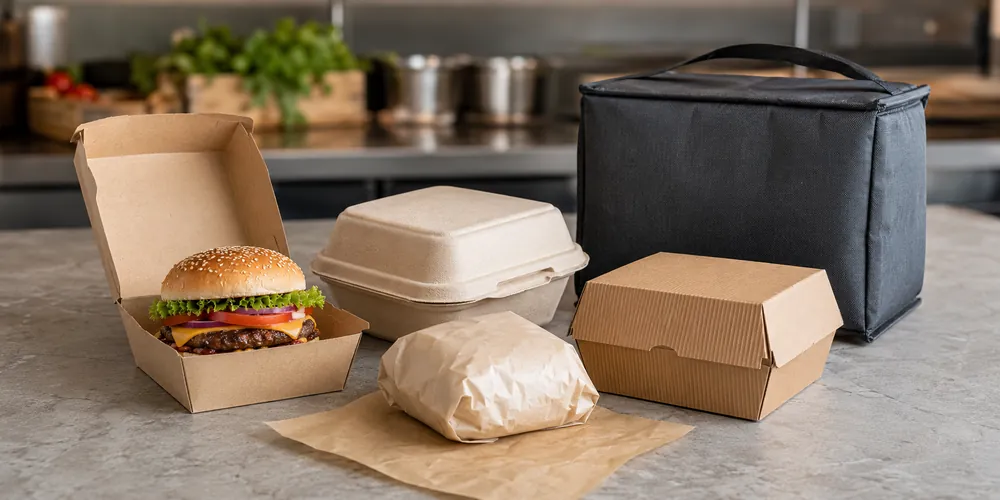
Kraft and Paperboard
Kraft and paperboard boxes print well, fold into compact shapes and come in several sizes. Thickness, coating and carton structure determine how they handle grease and weight. Brown kraft color does not prove that a box is recyclable or compostable.
Corrugated Board
Small-flute corrugated boards add strength for large burgers, meal kits and longer delivery routes. It works well when stacking pressure, burger height or order weight is a concern.
Molded Fiber
Molded-fiber clamshells may use plant fibers such as bagasse. Their environmental outcome depends on coatings, food contamination and local disposal. EPA guidance notes that compostable food-service items should be used where a suitable commercial composting program accepts them.
Greaseproof Wraps and Sleeves
Wrapping paper holds toppings close to the patty and suits compact hamburgers. A sleeve adds brand space, while tall or sauce-heavy burgers may still need an outer box.
How Custom Printing Supports Burger Branding
Custom printed burger boxes can carry a logo, product name, allergen message, QR code or loyalty offer. Important text should remain readable after folding and stay away from locking tabs, grease-prone areas and trim lines.
Restaurants planning unusual carton structures can use samples and prototypes before placing a large order. Our guide to 3D printing in packaging and custom box design explains how physical models can help teams review size, inserts and presentation before full production.
Brand characters can also appear on burger boxes, wrappers and kids’ meal packaging. Before using a mascot, define its audience, personality and role across print and digital channels. The guide to packaging mascots provides useful background on how characters support brand memory. Packaging NextGen also recommends checking that illustrations remain clear at the final printed size.
How to Select Burger Box Sizes
Measure at least three finished burgers made during normal service. Record their maximum width, depth and height, then test a sample. Internal dimensions matter because walls, tabs and folds reduce usable space.
Also review:
- Burger height after adding toppings
- Grease and sauce load
- Holding and delivery time
- Need for vents or liners
- Whether boxes will be stacked
- Placement inside takeaway bags
- Space for labels and order names
- Packing speed during busy service
One carton may fit several simple burgers, but sliders, tall doubles and sauce-heavy burgers often need other sizes. A small group of tested boxes can reduce packing mistakes.
Frequently Asked Questions
What are the most common types of burgers?
The most common types of burgers include hamburgers, cheeseburgers, smash burgers, double burgers, chicken burgers, fish burgers, veggie burgers, plant-based burgers and sliders. They may be categorized by patty, cooking method, toppings, size or origin.
What is the difference between a hamburger and a cheeseburger?
A hamburger contains a cooked patty inside a bun with optional toppings. A cheeseburger follows the same structure but adds cheese.
How is a smash burger different from a regular burger?
A smash burger is pressed onto a hot flat surface, producing a thin patty with crisp edges. A regular burger is shaped before cooking and usually left thicker.
Which burger packaging helps prevent a soggy bun?
A vented carton releases part of the steam from hot meat and toppings. Results depend on temperature, sauce, box size, vent placement and delivery time, so filled samples need real-service testing.
What size box is suitable for a double burger?
Measure the finished width and height after adding every topping. Choose a box that closes without pressing the bun, then test it during stacking and delivery.
Are kraft burger boxes grease-resistant?
Not automatically. Kraft describes the paper or appearance, not its barrier performance. Verify the grease barrier and test it with the restaurant’s oils, sauces, temperature and holding time.
Can the same box be used for every kind of burger?
A standard carton may fit several single-patty burgers, but sliders, tall doubles and sauce-heavy items have different needs. Two or three tested sizes may serve the menu better.
Final Thoughts
The many types of burgers differ in more than flavor. Patty thickness, cooking method, toppings, heat, grease and serving size all affect how the food should be packed. A useful burger box controls movement, leaves enough room for the bun and manages steam and grease during the expected journey.
Packaging NextGen helps readers connect menu structure, material choice, printing and real-world testing. Start with the finished burger, measure it accurately and test the complete order before choosing custom burger boxes or burger boxes wholesale for regular service.