
Toothpaste packaging has a harder job than squeezing paste onto a brush. It must protect a moisture-sensitive formula, survive filling and transport, stand neatly on a retail shelf, dispense a controlled amount and carry instructions that remain readable throughout use. Today’s options range from multilayer laminate tubes and aluminum tubes to recyclable HDPE structures, stand-up bottles, refill systems and paperboard cartons. This Packaging NextGen guide explains how each format works, where recycling claims need context and what oral-care brands should test before production.
What Is Toothpaste Packaging?
Toothpaste packaging is the complete pack system used to contain, protect, dispense, display and identify toothpaste. It normally includes a flexible tube or dispenser, a cap or closure, an end seal, printed product information and, in many cases, a paperboard carton.
A successful package must keep the formula stable while remaining easy to squeeze. It also needs enough strength for factory filling, case packing, shipping, store handling and repeated use in a humid bathroom.
Most toothpaste is sold in one of four primary formats:
| Format | Common Material | Best-Known Benefit | Main Limitation |
| Laminated tube | Plastic layers, sometimes with aluminum | Strong formula protection | Mixed layers can be hard to recycle |
| Recyclable tube | Mainly HDPE | Compatible with some HDPE recycling streams | Local collection varies |
| Aluminum tube | Aluminum with internal coating | Strong barrier and controlled collapse | Can dent and crease |
| Pump or stand-up dispenser | Rigid or semi-rigid plastic | Countertop stability and dose control | Uses more components |
The right choice depends on formula chemistry, barrier needs, filling equipment, target market, product size, printing, budget and local recovery systems.
Why Toothpaste Needs Specialized Packaging
Toothpaste is a semi-solid product containing water, abrasives, flavors, humectants, active ingredients and other components. The exact recipe differs across whitening, fluoride, sensitivity, children’s, charcoal and fluoride-free products.
The package may need to manage:
- Moisture transfer
- Oxygen exposure
- Flavor and aroma loss
- Ingredient interaction
- Seal leakage
- Cap contamination
- Formula drying
- Tube cracking
- Print wear
- Bathroom humidity
Traditional tubes often use several thin material layers because one polymer may not provide every required property. A barrier layer can reduce oxygen or moisture movement, while an outer layer supports printing and an inner contact layer protects the formula.
This layered construction supports product protection but creates a recycling challenge. When plastic and aluminum are permanently bonded, many standard recycling systems cannot separate them economically.
Main Types of Toothpaste Packaging
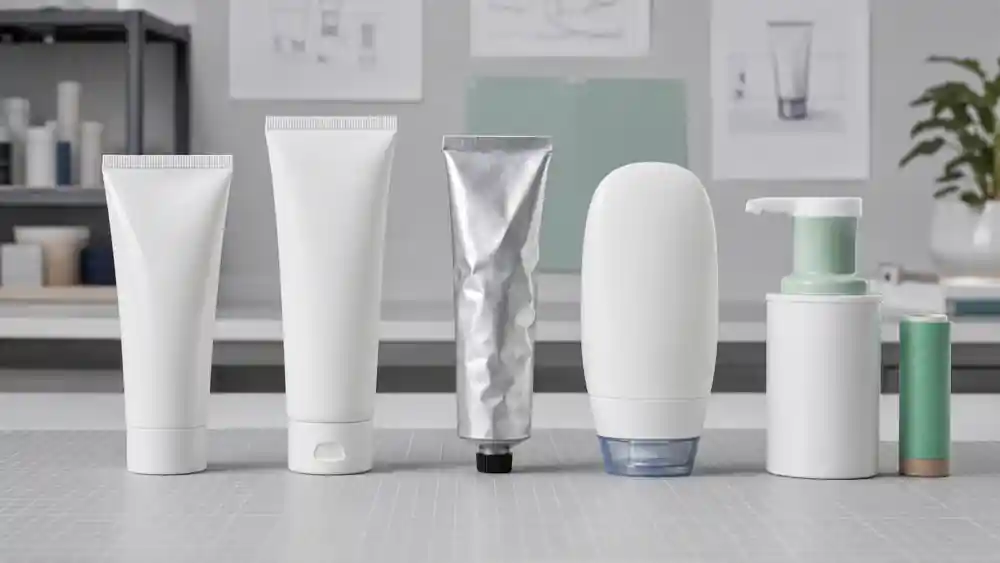
1. Plastic Laminate Toothpaste Tubes
Plastic laminate tubes use several bonded polymer layers. They are smooth, printable and resistant to denting. The material can return partly to shape after squeezing, which gives the tube a clean appearance during use.
These tubes can support:
- High-quality graphics
- Gloss, matte or soft-touch surfaces
- Flip-top and screw caps
- Different nozzle sizes
- High-speed filling
- Wide product size ranges
The material structure should be checked carefully. A tube described as “plastic” may still contain several polymer types, adhesives or a barrier component that affects recycling.
2. Aluminum Barrier Laminate Tubes
Aluminum barrier laminate, often shortened to ABL, places a thin aluminum layer between plastic layers. The aluminum provides strong protection against oxygen, moisture and flavor loss.
ABL tubes have long been used for toothpaste because they protect sensitive formulas and run on established filling equipment. Their main end-of-life weakness is the permanent combination of metal and plastic.
An ABL tube may still be the right technical choice for a formula with demanding barrier needs. However, brands making environmental claims should explain the material structure instead of relying on vague terms.
3. Plastic Barrier Laminate Tubes
Plastic barrier laminate, or PBL, replaces the aluminum barrier with a polymer-based layer such as EVOH. A PBL tube can provide a smoother surface and reduce the permanent creasing seen in metal-based laminate.
Some PBL tubes remain mixed-material packages. The presence of only plastic does not automatically make a tube compatible with every plastic recycling stream. Resin type, layer percentage, adhesives, inks, cap material and local sorting all matter.
4. Recyclable HDPE Toothpaste Tubes
Recyclable toothpaste tubes are now commonly built mainly from high-density polyethylene, known as HDPE or #2 plastic. HDPE is widely used for bottles, but turning it into a soft tube required packaging engineers to combine grades and layer thicknesses that provide both squeeze and barrier performance.
Colgate-Palmolive reported that its development team tested multiple HDPE combinations before gaining recognition from the Association of Plastic Recyclers. The company also tested whether tubes could travel through material-recovery sorting equipment. Colgate recyclable tube development
An HDPE tube can be technically compatible with the HDPE container stream, but this does not mean every household recycling program accepts toothpaste tubes. Consumers should check local rules.
5. Aluminum Toothpaste Tubes
Traditional aluminum tubes collapse as the product is squeezed out. This behavior can limit air moving back into the package and helps users see how much product remains.
Aluminum provides a strong barrier, but the pack may crease, split at sharp folds or look worn before it is empty. The inner coating must also be compatible with the toothpaste formula.
Metal tubes remain useful for dental gels, specialty pastes, pharmacy products and brands seeking a traditional pack format. Recycling acceptance depends on local metal collection and the amount of residual paste.
6. Stand-Up Tottles
A “tottle” is a tube-and-bottle hybrid designed to stand on its closure. Gravity keeps the product near the opening, which can make dispensing easier.
Tottles provide a large decorating area and stable shelf presentation. They may also reduce the need for an outer carton when the body has enough space for required copy and tamper evidence.
The trade-off is greater material use than a thin collapsible tube in many designs. A stand-up structure can also contain several resins, a barrier layer and a separate closure.
7. Pump Toothpaste Dispensers
Pump dispensers can provide controlled dosing and cleaner countertop use. Depending on the design, they may use a rigid container, airless pump, internal piston, spring, dip tube, refill cartridge or flexible inner pouch.
Benefits include:
- More consistent dose
- Less cap mess
- Easier one-handed use
- Strong countertop presence
- Better access for some users
However, springs, mixed polymers and internal parts can make disposal difficult. Refill systems only reduce waste when consumers keep the main dispenser long enough and replacement cartridges use meaningfully less material.
8. Toothpaste Tablets and Powder Packs
Toothpaste tablets and powders can be sold in glass jars, metal tins, paper pouches or plastic containers. They remove the need for a squeeze tube, but they create different concerns around moisture control, dosing, hygiene and travel.
A tablet container should prevent humidity from weakening the product. A refill pouch may reduce weight, but its laminate structure should still be disclosed.
Toothpaste Tube Materials Compared
| Material System | Barrier Level | Squeeze Behavior | Printing | Recycling Consideration |
| ABL | High | Moderate, may crease | Strong print surface | Bonded metal and plastic are difficult to separate |
| PBL | Medium to high | Smooth squeeze | Strong print surface | Compatibility depends on resin mix and layers |
| HDPE laminate | Medium to high, structure-dependent | Soft when engineered correctly | Suitable for tube printing | May enter HDPE stream where accepted |
| Aluminum | High | Collapses during use | Printed or labeled | Local metal rules and residue affect recovery |
| Rigid plastic dispenser | Structure-dependent | Pump or bottle dispensing | Large decorating area | Multiple components may need separation |
| Refill cartridge | Structure-dependent | Used inside a dispenser | Limited print area | Benefit depends on material reduction and collection |
No material wins every comparison. Formula protection should come first because spoiled or dried toothpaste creates product waste in addition to packaging waste.
Anatomy of a Toothpaste Tube
A toothpaste tube may look simple, but several parts work together.
Tube Body
The body holds the product and carries most branding and required copy. It must resist flex cracking, pinholes, abrasion and formula interaction.
Shoulder
The shoulder joins the flexible body to the neck. It is often made by injection molding and bonded to the tube sleeve. The shoulder material should align with the recycling goal where possible.
Nozzle
The nozzle controls the shape and amount of paste. A narrow opening supports smaller doses, while a wider nozzle suits thicker or foaming formulas.
Cap
Common closures include screw caps, flip-top caps, hinged caps and stand-up closures. The cap should resist cracking and open without excessive force while staying closed during shipping.
End Seal
After filling, the open end of a plastic tube is heat-sealed. Aluminum tubes are usually folded or crimped. The seal must withstand case packing, storage and consumer squeezing.
Tamper Evidence
Tamper evidence may come from a foil membrane, breakable feature, shrink band, sealed carton or another visible barrier. The chosen method should match the product category and market rules.
How Barrier Layers Protect Toothpaste
Barrier performance is a key part of toothpaste tube packaging. A tube wall controls how quickly oxygen, moisture and volatile flavor compounds move through the package.
Low barrier can lead to:
- Paste drying near the nozzle
- Change in flavor strength
- Formula separation
- Weight loss
- Reduced shelf life
- Color change
Brands should set measurable oxygen- and moisture-transmission targets based on formula testing. A material supplier’s general data sheet is not a replacement for a filled-pack shelf-life study.
Testing should cover normal storage plus higher temperatures and humidity. Shipping conditions can be harsher than a bathroom shelf, particularly when products move through hot warehouses or long distribution routes.
Caps, Closures and Controlled Dispensing
The closure affects user experience, leakage and pack cleanliness. A cap that is hard to open may frustrate children, older adults or people with limited hand strength. A loose closure may leak in a travel bag.
Brands should test:
- Opening and closing force
- Hinge life
- Drop impact
- Leakage under pressure
- Nozzle blocking
- Cap alignment
- Standing stability
- Residue buildup
- Child-use instructions
The nozzle also affects perceived value. A smooth ribbon, small bead or patterned dose can make the product feel different even when the formula is similar.
Does Toothpaste Need an Outer Carton?
Many toothpaste products are sold inside folding cartons. The carton provides a flat surface for branding, barcodes, instructions, ingredients, drug information and retail handling.
Benefits of a Toothpaste Carton
- Better stacking and shelf alignment
- More room for regulatory copy
- Added tube protection
- Easier case packing
- Larger printable surface
- Space for tamper evidence
Reasons to Remove the Carton
- Lower material use
- Reduced pack weight
- Smaller shelf footprint
- Fewer packing steps
- Less consumer waste
Removing the carton is not automatically better. If the unboxed tube is damaged more often, harder to display or too small for readable instructions, the change may shift waste elsewhere.
Where a carton is used, paperboard grade, recycled content, coating, glue, printing and recovery instructions should be reviewed together. Structural sampling can prevent errors before a large print order. Our guide to 3D printing innovations in packaging explains how physical models can help teams assess shape and product fit during development.
Toothpaste Packaging Design and Printing
Toothpaste packaging design must communicate quickly in a crowded oral-care aisle. Shoppers often compare cavity protection, whitening, sensitivity, flavor, age group and ingredient claims within seconds.
The front panel should make the product type easy to identify. Supporting panels can carry:
- Product name
- Active ingredient
- Intended use
- Flavor
- Age guidance
- Net quantity
- Directions
- Warnings
- Ingredient list
- Manufacturer or distributor details
- Lot and date codes
- Barcode
- Disposal instructions
Color systems help separate flavors and product benefits, but color should not be the only differentiator. Text and symbols should remain clear for shoppers with limited color vision.
Food packaging also uses recurring colors and characters to speed shelf recognition. The same visual principles can be studied in our article on the world of cereal mascots, even though oral-care products require a different tone and stricter claim review.
Packaging NextGen recommends testing printed tubes under rubbing, moisture and repeated squeezing. Ink that looks accurate on a flat proof may crack or distort around a curved shoulder or end seal.
Oral-Care Packaging and Tamper Evidence
Packaging rules depend on product classification and country. A cosmetic mouthwash, fluoride toothpaste and prescription dental gel may not follow the same requirements.
In the United States, the FDA says liquid oral-hygiene products such as mouthwashes and breath fresheners sold at retail must use tamper-resistant packaging. The pack also needs a visible statement that identifies the protective feature. FDA cosmetics labeling summary
Possible tamper indicators include:
- Breakable caps
- Neck bands
- Inner seals
- Sealed cartons
- Pouches
- Blister structures
Brands should confirm applicable rules with qualified regulatory specialists before approving a pack. A packaging supplier can advise on materials and machinery, but product classification and label compliance require market-specific review.
Hello Toothpaste Packaging: A 2013–2026 Case Study
Hello Products provides a useful example of how oral-care packaging can change as a brand grows, ownership changes and material technology moves forward.
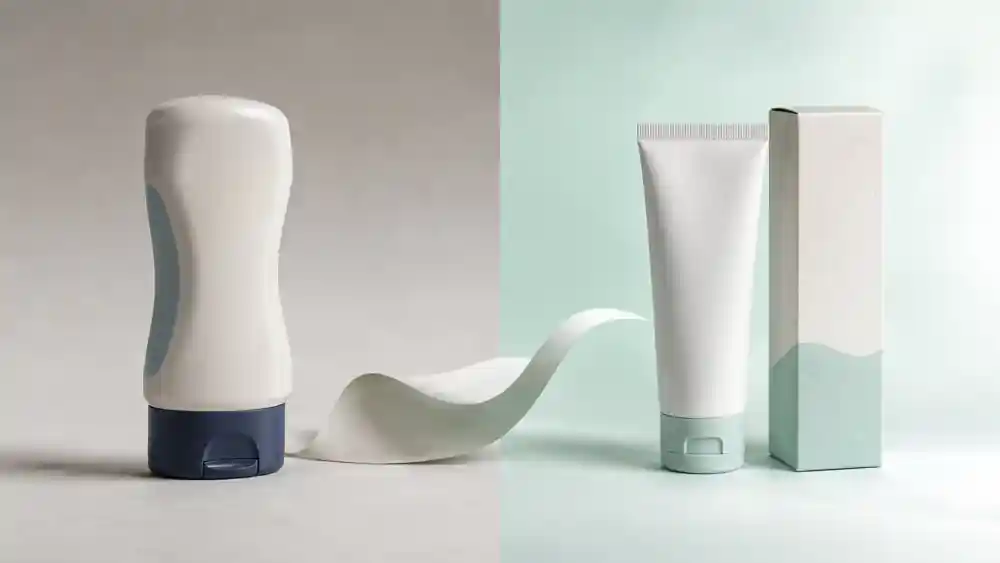
The Original 2013 Hello Tottle
When Hello launched its oral-care line in 2013, its toothpaste used an upside-down squeezable tottle instead of a conventional crumpling tube.
The reported structure included:
- Multilayer polyethylene
- EVOH barrier layer
- Soft-touch outer resin
- Polypropylene hinged closure
- Stand-up orientation
- Shaped dispensing tip
- Small tamper-evident band
The filled tottle was designed to be sold without the regular outer carton used by many toothpaste brands. This reduced secondary material and gave the package a different shelf shape.
The original project was also a major commercialization effort. Packaging World reported that TricorBraun coordinated 20 molds in six months, reviewed more than 40 vendors and selected 11 suppliers across tooling, production, decoration, assembly and transport. Original Hello packaging case study
Mouthwash and Breath-Spray Packs
The same launch included curved PET mouthwash bottles with custom closures and a small breath-spray bottle with a twist-lock pump. Flavor-specific colors linked the products across the range.
The project treated shape, dispensing and color as part of one brand system. It also showed the difficulty of moving several new molds, decorators and filling components toward one launch date.
Colgate-Palmolive Acquisition
Colgate-Palmolive announced an agreement to acquire Hello Products in January 2020. The acquisition moved the brand into a much larger oral-care portfolio with global packaging research and production resources.
Current Hello Recyclable Tubes
Hello later began moving its toothpaste range to recyclable tubes made mainly from #2 HDPE, with #5 polypropylene caps. Its official guidance tells consumers to check the HDPE symbol and confirm that local facilities accept tubes.
The brand also states that the tube is not biodegradable. Where accepted, users should squeeze out the remaining paste, replace the cap and place the package in the appropriate collection stream without cutting it open.
2013 and Current Packaging Compared
| Packaging Area | 2013 Launch | Current Direction |
| Primary toothpaste pack | Stand-up multilayer tottle | Mainly HDPE-based recyclable tube transition |
| Barrier | PE and EVOH structure | HDPE laminate structure, SKU-dependent |
| Closure | PP hinged stand-up cap | PP cap on current tube |
| Secondary carton | Original tottle avoided regular carton | Current SKU and market may use recyclable carton |
| Main message | Shape, color and friendly dispensing | Recycling compatibility plus brand identity |
| Disposal issue | Mixed multilayer structure | Local acceptance of HDPE tubes still varies |
The case shows that packaging considered modern in one period may later be reviewed against new recycling expectations. Shape and shelf impact still matter, but material recovery has become a larger design input.
Are Toothpaste Tubes Really Recyclable?
“Recyclable” can describe design compatibility, not guaranteed collection or reprocessing.
A complete tube-recycling pathway requires:
- The tube to meet material guidelines.
- The resident to identify it correctly.
- The local program accepted it.
- Sorting equipment to capture it.
- A reprocessor to buy and clean the material.
- A manufacturer to use the recovered resin.
If one stage is missing, a technically compatible tube may still be discarded.
Colgate-Palmolive reports that approximately 98% of its global toothpaste SKUs had transitioned to its recyclable tube format by December 31, 2025. The company also notes that community acceptance is not universal.
This distinction should appear clearly in consumer-facing claims. “Check locally” is not a small disclaimer; it tells users that the package may not have a recovery route in their area.
Sustainable Toothpaste Packaging Options
Sustainable toothpaste packaging can reduce material, improve recycling compatibility or support reuse. Each route brings trade-offs.
Mono-Material-Led Tubes
HDPE-led designs aim to fit an existing plastic stream. The cap, shoulder, inks and barrier layers should be assessed alongside the tube body.
Lightweighting
Reducing tube-wall thickness, cap weight or carton board can lower material use. Testing must confirm that lighter packs still survive shipping and repeated squeezing.
Carton Reduction
A brand may remove the outer carton or reduce its dimensions. Required copy must remain legible, and retail damage should be measured before rollout.
Refill Systems
Reusable pumps paired with smaller refills can reduce repeated dispenser production. A credible comparison should count the main pack, refill material, shipping and the number of reuse cycles.
Toothpaste Tablets
Tablets can use jars, tins or pouches and avoid traditional tubes. Their total impact depends on moisture protection, package weight and consumer adoption.
Bio-Based Polyethylene
Bio-based PE uses renewable feedstock but remains polyethylene. It should not be described as biodegradable unless the finished material meets a relevant standard and disposal route.
Packaging NextGen advises brands to support environmental statements with material percentages, test methods and local disposal instructions. Broad green language creates confusion and may expose the brand to claim challenges.
How Toothpaste Packaging Is Manufactured
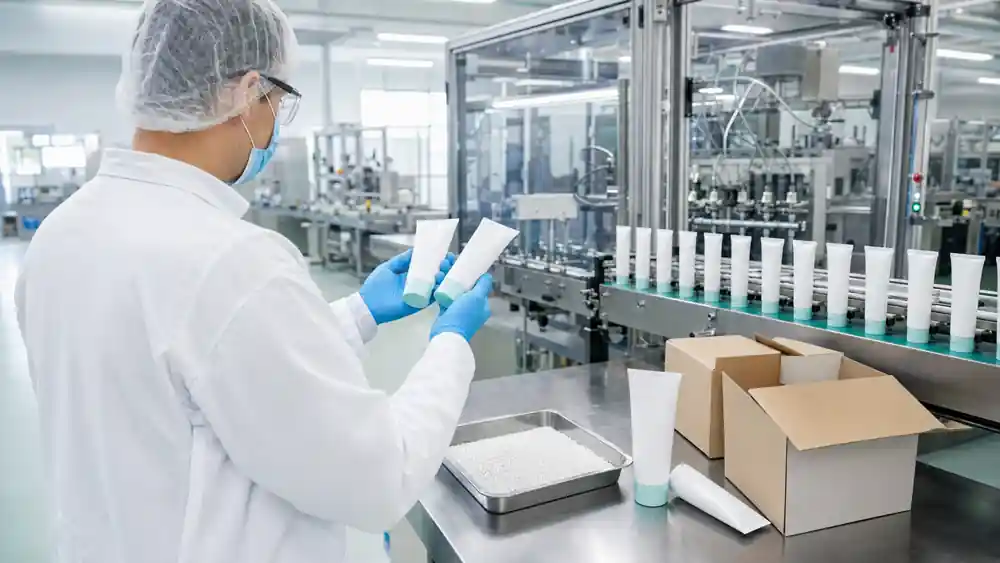
A common plastic-tube process includes:
- Printing or decorating tube material
- Forming the sleeve
- Joining the shoulder and neck
- Applying the closure
- Filling from the open end
- Heat-sealing the end
- Coding the batch or date
- Inspecting seals and print
- Packing tubes into cartons or cases
Methods differ for extruded tubes, laminate tubes, aluminum tubes and rigid dispensers.
Production trials should check whether the material runs consistently at planned speed. A small lab sample may perform well but behave differently during continuous filling and sealing.
When a project includes cartons, leaflets or grouped printed pieces, understanding what collate means when printing can help teams keep components in the correct sequence.
Testing Checklist for Toothpaste Packaging
Before approving commercial production, brands should consider:
- Formula compatibility
- Oxygen transmission
- Moisture transmission
- Flavor retention
- Tube squeeze force
- Seal strength
- Cap torque
- Hinge-cycle testing
- Drop testing
- Leakage under pressure
- Hot and cold storage
- Transport vibration
- Print rub resistance
- Barcode scanning
- Standing stability
- Consumer-use trials
- Recovery compatibility
Testing should use filled packs from the intended production process. Empty-pack tests cannot reproduce every interaction between formula, seal, cap and wall.
Common Toothpaste Packaging Mistakes
Selecting Material Before Testing the Formula
A barrier that works for one toothpaste may not protect another. Whitening ingredients, essential oils and flavors can interact differently with contact layers.
Calling Every PE Tube Recyclable
The full construction must meet relevant design guidance. A PE label alone does not explain adhesives, barrier percentage, cap resin or local collection.
Ignoring Product Left in the Tube
Shoulder shape, nozzle size and wall stiffness affect how much toothpaste remains. Residual product influences both consumer value and recycling.
Using a Carton Without a Clear Purpose
An outer box should provide protection, communication, retail handling or tamper evidence. If it adds none of these, its value should be questioned.
Treating the Cap as a Separate Decision
Cap resin, weight, hinge, opening force and compatibility influence the whole package.
Printing Disposal Claims Too Small
Recycling guidance should be readable and placed where it remains visible during use.
How Small Oral-Care Brands Should Choose Packaging
Small brands may not have the volume needed for new molds or fully custom tube structures. Packaging NextGen suggests starting with stock tubes, printed decoration and standard closures to reduce tooling cost and lead time.
Start with these questions:
- What barrier does the formula require?
- What tube sizes match the planned fill?
- Is the product a cosmetic, OTC drug or another category?
- How much label space is required?
- Will the tube be sold with a carton?
- What minimum quantity can the supplier produce?
- Can the filling partner run the selected tube?
- Which recovery claim is supported?
- Is the cap included in the recycling assessment?
- How will the pack be tested before launch?
A stock pack with accurate claims and reliable filling is often a better first launch than an expensive custom shape that causes delays.
Future of Toothpaste Packaging
The next stage of oral-care packaging will likely focus on better alignment between design, collection and actual recovery.
Key areas include:
- Wider use of HDPE-compatible tubes
- Caps that align more closely with tube streams
- Lower material weight
- Clearer disposal instructions
- Refill systems with measured reuse
- Paper-based toothbrush packaging
- Digital product information
- Better tube sorting at recovery facilities
- Packaging imagery that reflects age-appropriate toothpaste use
The industry challenge is no longer only creating a tube that passes a laboratory test. Brands, municipalities, recovery facilities and consumers must all understand what to do with it.
Final Thoughts
Toothpaste packaging balances formula protection, dispensing, branding, manufacturing and disposal. Multilayer tubes offer strong barriers, aluminum tubes collapse neatly, stand-up tottles improve access and HDPE structures can improve compatibility with some recycling streams.
The Hello Products case shows how those priorities change over time. Its 2013 tottle focused on shape, color and dispensing without a regular outer carton. Its later HDPE tube direction reflects growing pressure for packaging that can enter an established material stream.
No format should be selected from appearance or a single environmental claim. Brands need filled-pack testing, accurate material data, local recovery checks and clear consumer instructions. Packaging NextGen helps businesses examine those choices from the first package model through printing, filling and end-of-life planning.
Frequently Asked Questions
What is toothpaste packaging made of?
Toothpaste packaging may use plastic laminate, aluminum barrier laminate, plastic barrier laminate, HDPE, aluminum or rigid plastic. Many products also use a printed paperboard carton.
What is the best material for toothpaste tubes?
The best material depends on formula barrier needs, filling equipment, squeeze behavior, printing, cost and local recovery. HDPE-led tubes offer a recycling route in some markets, while higher-barrier laminates may suit sensitive formulas.
Are toothpaste tubes recyclable?
Some modern toothpaste tubes are designed for the HDPE recycling stream. Acceptance varies by community, so users should check local rules and look for recycling instructions on the tube.
What is an HDPE toothpaste tube?
An HDPE toothpaste tube is made mainly from high-density polyethylene, the #2 plastic also used in many bottles. Different HDPE grades and layers can create a tube that protects the formula while remaining squeezable.
Why were traditional toothpaste tubes difficult to recycle?
Many traditional tubes permanently bond different plastics with a thin aluminum barrier. Standard recycling systems cannot easily separate these layers into usable material.
What is a toothpaste tottle?
A toothpaste tottle is a tube-and-bottle hybrid that stands upside down on its closure. Gravity keeps the paste near the nozzle and helps the package remain stable on a counter or shelf.
Does toothpaste need a cardboard box?
Not always. A carton provides space for information, retail stacking, protection and tamper evidence. Some brands remove it to reduce material when the primary pack can carry all required information.
What is the difference between ABL and PBL tubes?
ABL uses a thin aluminum barrier between plastic layers. PBL uses polymer-based barrier layers. ABL often provides stronger barrier protection, while PBL can provide a smoother squeeze and different recovery options.
What type of cap is used on toothpaste?
Toothpaste commonly uses screw caps, flip-top caps or hinged stand-up closures. Cap choice affects leakage, opening force, dosing, cleanliness and recycling compatibility.
How should an empty toothpaste tube be prepared for recycling?
Squeeze out as much toothpaste as possible, replace the cap and follow local collection instructions. Do not place the tube in recycling unless the pack and local program indicate acceptance.
Is bio-based PE toothpaste packaging biodegradable?
No. Bio-based PE is chemically similar to conventional polyethylene and is not normally biodegradable. Its benefit comes from renewable feedstock, not from breaking down in home compost.
What should a toothpaste brand test before production?
The brand should test formula compatibility, barrier performance, seals, caps, leakage, squeeze force, hot and cold storage, transport, print wear, filling speed and the accuracy of disposal claims.