
A folding carton can look perfect on a screen and still fail once it is printed, filled, stacked or exposed to moisture. The problem is often not the artwork or box style but the board beneath it. Paperboard grades for packaging differ in fiber source, stiffness, surface color, print response, fold performance and price. Selecting the right grade helps a box protect its contents, reproduce artwork accurately and run through converting equipment with fewer problems.
At Packaging NextGen, we study packaging materials from the viewpoint of brands, designers, printers and buyers. This guide compares SBS, FBB, CUK, SUS, CRB, CCNB, WLC and URB so you can match a paperboard grade with the product, printing method, finish, distribution environment and budget.
What Are Paperboard Grades?
Paperboard grades are material categories based on fiber composition, manufacturing method, coating, color, density and intended use. A grade tells a converter more than whether a board is white or brown. It helps indicate how the sheet may print, score, fold, glue and resist compression.
The major grades used for folding cartons and paper-based packaging include:
- Solid Bleached Sulfate (SBS)
- Folding Box Board (FBB)
- Solid Unbleached Sulfate (SUS or SUK)
- Coated Unbleached Kraft (CUK)
- Coated Recycled Board (CRB)
- Clay Coated News Back or Newsback (CCNB)
- White Lined Chipboard (WLC)
- Uncoated Recycled Board (URB)
Supplier names can vary by country and mill. Ask for a technical data sheet and physical sample instead of approving a material from its acronym alone.
Key Takeaways
- SBS provides a white surface and strong print results for cosmetics, medicine, food and premium retail cartons.
- FBB uses multiple fiber layers to provide good stiffness at a relatively low weight.
- SUS and CUK use strong unbleached kraft fibers and are common in beverage, frozen-food and natural-looking packaging.
- CRB, CCNB and WLC are recycled-board families commonly used for cereal, tissue, dry food, household and mass-market cartons.
- URB or chipboard is usually selected for rigid-box cores, dividers, pads and concealed structural parts.
Paperboard vs Cardboard vs Corrugated Board
Paperboard is a thick, foldable paper-based material commonly converted into folding cartons. Examples include medicine boxes, cereal cartons, cosmetic cartons and toothpaste boxes.
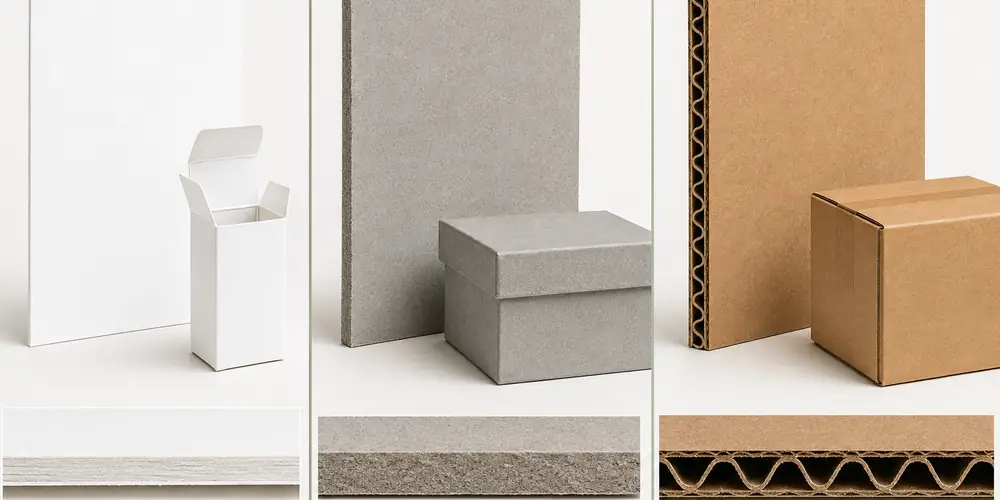
“Cardboard” is a broad everyday term rather than one precise technical grade. A customer may use it to describe paperboard, greyboard, corrugated board or another thick paper material.
Corrugated board contains a fluted middle layer between liner sheets. It is usually selected for shipping boxes, transit packs and heavier products. Paperboard is thinner and better suited to retail cartons that need detailed printing and compact storage.
Paperboard Grades Comparison
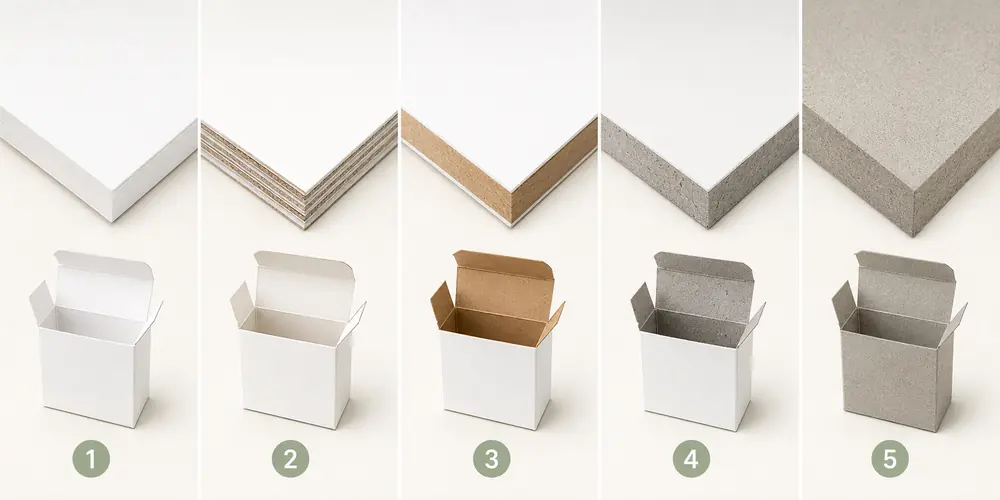
| Grade | Fiber source | Typical appearance | Print quality | Relative strength | Relative cost | Common applications |
| SBS | Bleached virgin chemical pulp | White throughout | Very high | High | High | Cosmetics, medicine, food and retail cartons |
| FBB | Multi-ply virgin fiber, often with a mechanical-pulp middle | White coated surface | High | High stiffness for its weight | Medium–high | Food, personal care, medicine and confectionery |
| SUS/SUK | Unbleached virgin kraft fiber | Natural brown | Moderate | Very high | Medium–high | Beverage carriers, frozen food and hardware |
| CUK | Coated unbleached kraft fiber | White or coated outside, brown inside | High on coated side | Very high | Medium–high | Beverage, freezer and retail packaging |
| CRB/CCNB/WLC | Recovered paper fibers with a coated print surface | White front, grey or brown back | Moderate–high | Moderate | Low–medium | Cereal, tissue, snacks, toys and household products |
| URB | Recycled mixed fiber | Grey or brown | Low | Moderate depending on caliper | Low | Dividers, rigid-box cores, pads and concealed supports |
This table is a starting point. Final performance depends on the mill specification, caliper, basis weight, moisture content, fiber direction, carton structure and coating system. Packaging NextGen recommends testing the selected board as a finished pack rather than judging an empty flat sample.
1. Solid Bleached Sulfate Paperboard
Solid Bleached Sulfate, usually shortened to SBS, is made mainly from bleached virgin chemical pulp. Its white appearance runs through the sheet, which gives die-cut edges and the inside of the carton a clean look.
SBS is commonly coated on one side or both sides. Its smooth print surface supports detailed images, small text, color control and finishes such as foil, embossing, debossing and spot coating. These qualities make it common in cosmetic, pharmaceutical, personal-care, confectionery and premium food packaging.
When SBS Is a Good Choice
- The inside and outside of the carton need a clean white appearance.
- Artwork contains fine detail, photography or controlled brand colors.
- The design includes foil, embossing or high-gloss areas.
- The product is lightweight or moderately heavy.
- A premium folding-carton presentation is required.
SBS usually costs more than recycled board. It may also require a suitable barrier when used in wet, frozen, greasy or direct-food-contact applications. Virgin fiber does not automatically mean irresponsible sourcing, just as a white board does not automatically prove food-contact compliance. Buyers should check sourcing certification and the exact mill specification.
2. Folding Box Board
Folding Box Board, or FBB, is a multi-ply paperboard. It commonly has a mechanical-pulp middle layer placed between stronger chemical-pulp outer layers. The outer print side is usually coated to provide a smooth white surface.
The layered construction can deliver high stiffness without requiring the same sheet weight as some solid grades. This can help reduce material weight while maintaining carton shape. FBB is widely used for food, confectionery, medicine, cosmetics and personal-care packaging.
When FBB Is a Good Choice
- Stiffness-to-weight performance is important.
- The carton requires a smooth offset-printing surface.
- The pack must fold and run efficiently on carton equipment.
- The product is sold in regions where FBB is widely available.
- The project needs a balance between presentation, weight and cost.
FBB is not automatically difficult to recycle because it contains several fiber plies. The more important concerns are plastic layers, metallic films, heavy coatings, adhesives and local collection rules. Request repulpability or recyclability information for the final converted structure, not only the unprinted base board.
3. Solid Unbleached Sulfate and Coated Unbleached Kraft
Solid Unbleached Sulfate, also called SUS or SUK, is produced from unbleached virgin kraft fibers. The natural brown color remains visible because the fiber is not fully bleached. The long kraft fibers provide strong tear and puncture performance.
Coated Unbleached Kraft, or CUK, uses an unbleached kraft base with a coating on the print side. This gives brands a smoother, lighter printing surface while retaining a brown interior. A clay or mineral coating is common, but CUK does not automatically mean the board has a polyethylene layer. Barriers are specified separately according to moisture, grease and product-contact needs.
When SUS or CUK Is a Good Choice
- The package needs strong tear resistance.
- The product is a beverage, frozen food, hardware item or other demanding pack.
- A brown interior supports the desired brand presentation.
- The carton needs good printing on one coated side.
- The project requires strong fibers without a white-throughout sheet.
Printing directly on natural kraft requires careful color planning. Brown fiber changes the appearance of transparent inks, so bright brand colors may need an opaque white base or adjusted artwork. Always review a press proof on the actual material.
4. Coated Recycled Board, CCNB and WLC
Coated Recycled Board, or CRB, is produced mainly from recovered paper fibers. It usually has a white coated print face with a grey, kraft or lighter-colored reverse side. It is widely used for high-volume consumer cartons where cost and recycled content matter.
CCNB and WLC are related terms used by different markets and suppliers. CCNB commonly refers to clay-coated newsback board, while WLC means white lined chipboard. Their exact fiber mix, reverse color and coating quality can vary. Do not assume every recycled coated board has the same stiffness, odor, cleanliness or print response.
Common Uses
- Cereal and dry-food cartons
- Tissue boxes
- Laundry and household packaging
- Pet-food cartons
- Toys and games
- Snack and confectionery boxes with suitable internal protection
Recycled fiber can be a strong material choice, but direct food contact requires a suitable grade, barrier and regulatory review. Recycled content, recyclability and food-contact approval are three separate claims.
5. Uncoated Recycled Board and Chipboard
Uncoated Recycled Board, often called URB, chipboard or greyboard in different buying contexts, is made from recovered paper without a premium coated print surface. It is usually grey or brown and has a more absorbent texture.
URB is commonly used where the board is hidden or covered, including rigid-box cores, partitions, layer pads, book covers, backing boards and internal supports. It is not usually the first choice for detailed direct printing.
Rigid gift boxes often use thick greyboard wrapped with printed paper. Brands planning presentation kits can connect material selection with these PR package ideas to plan the outer box, wrap, insert and product layout as one system.
SBS vs FBB vs CUK vs CRB
Choose SBS When:
You need white edges, high-detail printing, premium finishes or a clean interior for cosmetics, medicine, personal care or retail food cartons.
Choose FBB When:
You need good stiffness at a controlled weight, a smooth coated print face and efficient folding-carton production.
Choose CUK When:
You need strong kraft fibers, a coated exterior, a brown interior or better performance for beverage and freezer applications.
Choose CRB When:
You need a lower-cost recycled-content board for cereal, tissue, toys, dry products or mass-market cartons.
No grade is best for every product. The correct choice depends on the filled weight, carton dimensions, moisture exposure, shelf-life target, printing process, finish and supply region.
Choosing Paperboard by Industry

Cosmetics and Personal Care
SBS and FBB are common because their smooth surfaces support photography, fine text, metallic foil and controlled color. CUK may suit brands that want a natural brown interior with a clean printed face.
Food and Confectionery
SBS, FBB, CUK and selected recycled grades can all be used, but the final structure must match food-contact, grease, moisture and temperature requirements. A secondary liner, coating or inner pack may be required.
Pharmaceutical Packaging
Medicine cartons need legible small text, barcode quality, folding accuracy and consistent board performance. SBS and FBB are common options. The final material must also meet the product owner’s quality and regulatory requirements.
Toothpaste and Oral Care
Folding cartons often use SBS, FBB or coated recycled board depending on price, artwork and regional supply. Our guide to toothpaste packaging explains how the outer carton works with tubes, labels and material-reduction goals.
Frozen and Chilled Products
CUK, suitable SBS grades and other boards with moisture-resistant sizing or barriers may be used. Test the full carton under realistic cold-chain and condensation conditions.
Electronics and Product Kits
Paperboard cartons may be combined with dividers, molded fiber or other protective parts. Compare paperboard structures with processed molded pulp packaging when planning a fiber-based outer box and fitted insert.
Printing Methods for Paperboard
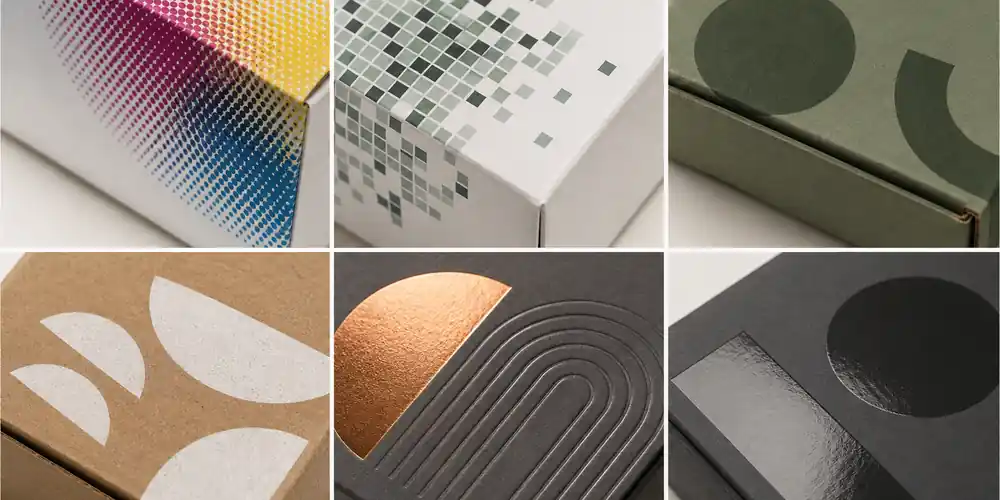
Offset Lithography
Offset printing is widely used for detailed folding-carton artwork, controlled colors and medium-to-large runs. Smooth coated SBS, FBB, CUK and CRB surfaces usually support strong results when inks, coating and drying are correctly planned.
Digital Printing
Digital printing is useful for samples, short runs, multiple designs and variable data. The board must be approved for the specific press, thickness range and ink or toner system.
Flexographic Printing
Flexography is common in high-speed packaging production and can print coated or uncoated materials. Surface texture, plate selection, anilox volume and artwork detail influence the result.
Screen Printing
Screen printing can apply bold colors, opaque white and selected specialty inks. It may suit short runs or artwork that requires heavier ink coverage.
Packaging NextGen advises testing ink adhesion, rub resistance, fold cracking and barcode scanning before approving a large production order.
What Do C1S and C2S Mean?
C1S means coated one side. One face is prepared for stronger print reproduction, while the reverse may remain uncoated or have a different surface.
C2S means coated two sides. Both faces have a coated printing surface. C2S can be useful when the inside of the carton includes instructions, color or promotional artwork.
Coated does not necessarily mean plastic-coated. Clay, mineral, aqueous, dispersion and polymer-based systems have different purposes and end-of-life effects.
GSM, Basis Weight and PT Explained
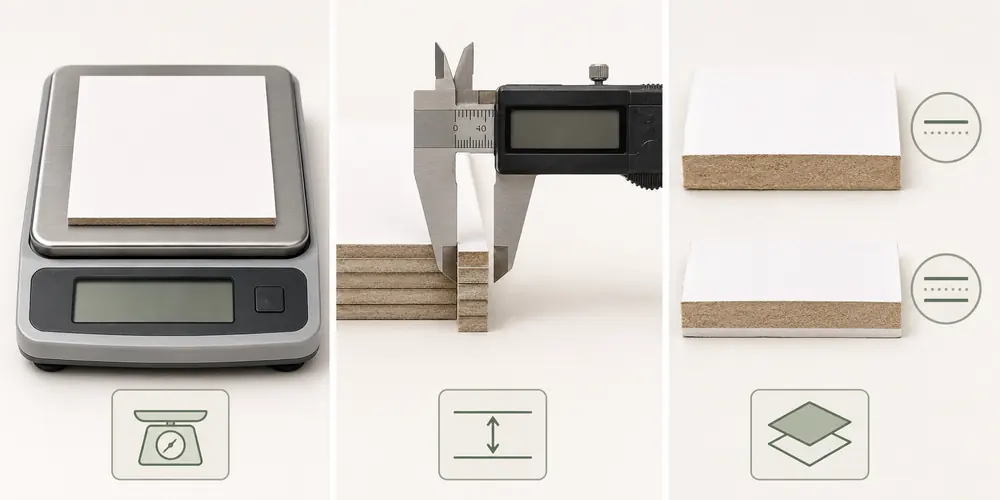
These measurements are related but not interchangeable.
- GSM means grams per square meter and measures sheet mass by area.
- Basis weight expresses the weight of a defined number of sheets at a category-specific basis size.
- PT or point commonly describes caliper. One point equals one-thousandth of an inch.
- Microns measure thickness in metric units.
A heavier GSM may be thicker, but fiber density and board construction can change the relationship. Two boards with similar GSM may have different caliper and stiffness. Ask suppliers for GSM, caliper, machine-direction stiffness and cross-direction stiffness rather than relying on one measurement.
Coatings and Finishes
Clay or Mineral Coating
Creates a smoother, lighter print face and improves ink holdout. It is common on SBS, FBB, CUK and recycled board.
Aqueous Coating and Varnish
Can adjust gloss, surface feel and rub resistance. Performance varies by formulation and application weight.
Dispersion Barriers
Water-based barrier systems may provide grease or moisture resistance. Their recycling behavior must be verified for the exact formulation.
Polymer Coatings and Laminations
PE or other polymer layers can support liquid, grease or moisture resistance but may affect repulping and recycling acceptance.
Foil, Embossing and Spot Coating
These processes can add contrast and branding detail. Their success depends on board smoothness, compression response, artwork and converting controls.
Is Paperboard Packaging Recyclable?
Many clean paperboard cartons can enter paper-recycling systems, but acceptance depends on local programs and the final package construction. Heavy plastic lamination, wax, metallic film, certain barriers, adhesives and product residue can change the outcome.
Avoid treating these statements as interchangeable:
- Made with recycled content
- Made from certified virgin fiber
- Recyclable where accepted
- Tested for repulpability
- Suitable for industrial composting
Packaging NextGen recommends requesting evidence for the exact printed and coated carton. A claim based only on the unconverted base sheet may not describe the finished package accurately.
Paperboard Buyer Checklist
Before requesting a quote, confirm:
- Product dimensions and filled weight
- Carton style and opening method
- Required caliper and stiffness
- Printing process and number of colors
- C1S or C2S requirement
- Inside-printing requirement
- Moisture, grease and temperature exposure
- Direct or indirect food contact
- Foil, embossing, varnish or spot coating
- Barcode and small-text requirements
- Recycled-content target
- Fiber-sourcing documentation
- Recycling claim and local acceptance
- Order quantity and regional board availability
- Packing-line speed and gluing requirements
- Transit, compression and shelf testing
For new structures, 3D printing innovations in packaging can support early fit checks and tooling discussions before final carton production. Board samples and printed prototypes should still be tested because a digital model cannot reproduce fiber direction, scoring or moisture response.
It is also wise to check whether the selected grade is available from more than one approved supplier. A material that performs well but has limited regional supply can create longer lead times and price risk.
Common Selection Mistakes
- Choosing a board from appearance alone
- Treating cardboard as one material grade
- Assuming high GSM always means high stiffness
- Confusing recycled content with recyclability
- Treating all kraft boards as the same
- Ignoring machine and cross direction
- Approving artwork on a white screen instead of the real board
- Forgetting opaque white beneath bright colors on brown kraft
- Adding a barrier without checking recycling effects
- Skipping filled-carton compression and transit tests
- Selecting a food carton without reviewing contact requirements
- Comparing unit price without checking board yield and pack weight
Paperboard Industry Development
Paper mills continue to develop lighter, higher-stiffness and recycled-content grades for folding cartons and other packaging uses. These changes can affect availability, pricing and how brand owners compare virgin and recycled fiber options.
Our overview of Graphic Packaging International includes examples of paperboard development, folding-carton applications and company activity that can help readers understand the wider supply landscape.
Selecting the Right Board for the Final Pack
The best paperboard is not simply the whitest, thickest or most expensive option. It is the grade that protects the filled product, runs correctly through printing and packing equipment, supports the artwork and meets the project’s cost and material goals.
Start with product weight, carton dimensions, moisture exposure and printing needs. Then compare physical samples, technical sheets and converted prototypes. When the board, coating, structure and print process are evaluated together, brands can reduce defects, control material use and create cartons that perform from packing line to retail shelf.
Packaging NextGen helps readers compare packaging materials through clear terminology, practical selection factors and realistic end-of-life guidance so better decisions can be made before production begins.
FAQs
What Are the Main Paperboard Grades for Packaging?
The main grades include SBS, FBB, SUS or SUK, CUK, CRB, CCNB, WLC and URB. Supplier terminology varies by region, so compare technical specifications.
What Is the Best Paperboard for Printing?
SBS and high-quality FBB commonly provide smooth surfaces for detailed printing. Coated CUK and CRB can also print well when matched with the right process.
What Is the Difference Between SBS and FBB?
SBS is generally made from bleached chemical pulp and is white throughout. FBB is a multi-ply board that often uses a mechanical-pulp middle layer for stiffness.
Is CUK the Same as Kraft Paperboard?
CUK is a kraft-based paperboard with a coated print surface. Uncoated SUS or SUK is also kraft-based but normally retains a more natural printing surface.
What Is the Difference Between CRB and CCNB?
Both refer to recycled-fiber board families with a coated print face. Exact fiber mix, reverse color, coating and regional naming vary by supplier.
Is GSM the Same as Paperboard Thickness?
No. GSM measures mass per square meter, while caliper measures thickness. Density and board construction can cause sheets with similar GSM to have different thicknesses.
Which Paperboard Is Best for Cosmetic Boxes?
SBS and FBB are common choices because they support detailed printing and premium finishes. CUK may suit packaging that needs a white exterior and brown interior.
Which Paperboard Is Used for Cereal Boxes?
CRB, CCNB and WLC are commonly used for cereal and dry-food cartons. The final board and inner bag must meet the product’s protection and contact requirements.
Can Kraft Paperboard Be Printed in Full Color?
Yes, but the brown base affects transparent inks. An opaque white layer or artwork adjustments may be required for bright and accurate colors.
Can Coated Paperboard Be Recycled?
Many mineral-coated cartons can be recycled where accepted. Polymer lamination, wax, foil, adhesives and product residue may change local acceptance.