
If you are asking what is a perfume atomizer, think beyond the small cloud of scent released by one press. The atomizer is a coordinated packaging system: a bottle holds the formula, a pump moves a measured amount, a nozzle shapes the mist, seals keep alcohol and fragrance inside, and an outer carton protects glass and printed decoration. One weak connection can cause drips, blocked spray, evaporation, loose collars or leakage inside a shipment. This guide from Packaging NextGen explains how perfume atomizers work, which formats brands can choose, what should be tested and how the complete package reaches a U.S. customer safely.
What Is a Perfume Atomizer?
A perfume atomizer is a dispensing package that converts liquid fragrance into small droplets and releases them as a mist. Most modern perfume atomizers use a finger-operated pump connected to a dip tube inside a glass, metal or plastic container. Pressing the actuator moves fragrance through the pump and nozzle, where a small opening and internal channels break the liquid into a spray.
The term may describe the pump alone, the bottle-and-pump assembly or a small refillable travel container. A packaging specification should remove that ambiguity by listing every component separately.
What Is A Perfume Atomizer Used For?
Perfume atomizers are used for full-size fragrance bottles, travel sprays, scent trial sets, promotional samples, body mists, colognes and selected oil-based scents. The required pump changes with the formula, target dose, bottle neck, desired mist and filling line.
Key Takeaways
- A perfume atomizer turns liquid fragrance into a controlled mist through a pump, actuator, nozzle and dip tube.
- The bottle, pump and cap must be selected as a tested set rather than ordered as unrelated parts.
- Crimp-on pumps suit sealed retail presentations, while screw-on systems can allow refilling when the full package is designed for repeated opening.
- Spray output, pattern, droplet character, prime strokes, actuation force and leakage should be measured with the final fragrance formula.
- Glass, plastic, metal, elastomers, coatings, adhesives and inks can react differently to alcohol, fragrance oils and repeated handling.
- Bottle decoration and outer-carton printing need separate artwork files, tolerances and approval samples.
- U.S. cosmetic labeling, carrier restrictions and environmental claims must be checked before production.
- A travel-size container that meets the TSA liquid-size rule is not automatically approved for every shipping route or fragrance formula.
How Does a Perfume Atomizer Work?
A modern finger pump stores a small amount of liquid in an internal chamber. When the user presses the actuator, the system pushes that liquid through a narrow pathway and the nozzle insert. The geometry of those passages helps divide the liquid into droplets and direct the spray.
When the user releases the actuator, a spring returns the pump to its starting position and the next amount of fragrance moves up through the dip tube. The exact internal design varies by supplier. Some pumps use pre-compression so pressure builds before the spray opens, which can reduce weak streams at the beginning or end of a press.
The pump is not expected to produce the same result with every liquid. Viscosity, surface tension, alcohol level, oils and suspended material can change priming, output and spray shape. That is why catalog specifications are a starting point, not a substitute for formula testing.
Atomization Versus An Aerosol
A typical perfume pump is an atmospheric dispenser operated by a finger. It does not require the propellant used in a conventional aerosol can. The user supplies the mechanical energy with each press.
This difference matters for package structure, filling, labeling and transportation classification. Do not describe a finger-pump perfume bottle as an aerosol simply because it creates a visible mist.
What Is a Perfume Atomizer Made Of?
The visible bottle and cap are only part of the assembly. A complete perfume atomizer may contain the following parts.
| Component | Main role | What the packaging team should verify |
| Bottle or vial | Holds the fragrance | Capacity, neck dimensions, material compatibility, weight and decoration area |
| Pump engine | Moves a repeatable amount of liquid | Formula compatibility, dosage, prime and re-prime behavior |
| Actuator | Surface pressed by the user | Comfort, required force, travel distance and alignment |
| Nozzle insert | Shapes the spray | Spray angle, pattern, droplet character and resistance to blockage |
| Dip tube | Carries liquid from the bottle | Length, internal diameter, cut angle and reach at low fill levels |
| Gasket or seal | Limits leakage at the neck | Material compatibility, compression and long-term seal behavior |
| Ferrule or threaded closure | Attaches the pump to the bottle | Neck match, crimp quality, torque or snap retention |
| Collar or overshell | Covers the pump attachment | Fit, color, finish, rotation and scuff resistance |
| Overcap | Protects the actuator | Retention, removal force, crack resistance and accidental-press protection |
| Refill valve or cartridge | Allows fragrance transfer in selected formats | Source-bottle compatibility, seal life and contamination control |
Bottle And Vial
Glass is common in prestige and mainstream fragrance because it can provide a clear, weighty container and a useful decoration surface. Plastic can reduce weight and breakage in minis or travel formats, but the resin needs compatibility testing with the finished fragrance. Metal shells often surround an inner glass or plastic reservoir rather than touching the fragrance directly.
Pump Engine
The pump contains several small parts that control intake, dosage, sealing and return. Suppliers offer different outputs and attachment styles. For example, current fragrance-pump ranges show crimp, screw and snap options along with several nominal dose volumes. Aptar lists 60 and 80 microliter options for one fragrance pump range, while the figures for another supplier or pump family may differ.
Do not select a pump from dosage alone. A 70-microliter pump and a 100-microliter pump can also differ in spray duration, angle, feel, compatibility and total number of usable sprays.
Actuator And Nozzle
The actuator is the button or head pressed by the user. Inside or at the face of the actuator, a nozzle insert directs the outgoing liquid. Small changes to internal paths and the exit opening can create a narrower, wider, wetter or drier spray.
The brand should approve the spray in motion, not only a still photograph. Record the viewing distance, background, lighting and number of presses when comparing options.
Dip Tube
A dip tube that is too short leaves fragrance in the bottle. One that is too long can bend against the base, restrict flow or look untidy through clear glass. The final cut should match the bottle base, shoulder geometry, filling orientation and desired evacuation.
Gasket, Ferrule And Collar
The gasket seals the connection between pump and bottle. A crimped ferrule is permanently formed around the neck. A threaded closure is tightened to a defined torque. A decorative collar can hide the attachment and align the visible finish with the cap.
These parts need dimensional tolerances. A cap that looks aligned in a rendering may rock, rotate or expose a gap when tolerances stack across the bottle, pump and collar.
Perfume Atomizer Versus Perfume Bottle
A perfume bottle is the container that holds the liquid. An atomizer is the dispensing system that produces the spray. In everyday shopping language, “perfume atomizer” often refers to the complete bottle, pump and cap.
| Term | Meaning in a packaging specification |
| Perfume bottle | Primary container or reservoir |
| Fragrance pump | Mechanical dispenser attached to the bottle |
| Atomizer | Pump assembly or complete spray package, depending on context |
| Fine mist sprayer | Broader dispenser category used across fragrance, beauty and home products |
| Travel atomizer | Small portable container, commonly refillable |
| Sample vial | Small trial container with a spray, stopper or dabber |
When requesting quotations, list the bottle, pump, dip tube, gasket, collar, cap and decoration individually. This makes supplier comparisons clearer and reduces assumptions about what is included.
Main Types of Perfume Atomizers
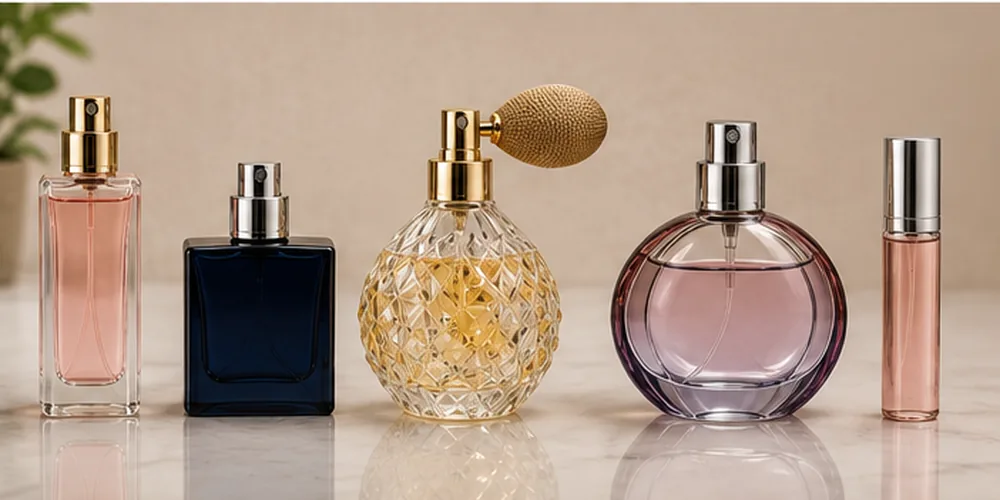
Crimp-On Atomizers
A crimp-on pump is placed over a compatible bottle neck and formed into position by filling-line equipment. It creates a clean, low-profile attachment and is common in retail fragrance bottles.
Advantages include strong retention and a controlled sealed presentation. The main tradeoff is that normal consumer removal is not intended. Reworking a crimped package can also require specialist equipment and replacement components.
Check:
- exact neck standard and diameter;
- ferrule material and height;
- crimp-tool profile;
- seal compression;
- visible crimp quality;
- pump alignment;
- leakage after temperature and transport exposure.
Screw-On Atomizers
A screw-on pump uses threads on the bottle neck. It can make assembly, removal and refilling easier when the package is designed around repeated opening. The closure still needs an agreed application torque and seal system.
Refillability depends on more than threads. The consumer needs a practical refill product or refill route, clear instructions and components able to withstand repeated opening. The FTC Green Guides state that marketers should not make an unqualified refillable claim unless they provide a way to refill the package.
Snap-On Atomizers
Snap-on systems lock onto a matching neck feature. They can simplify selected assembly operations, but retention and leak resistance rely on exact geometry and material behavior. Test removal force, impact and temperature cycling with production parts.
Refillable Travel Atomizers
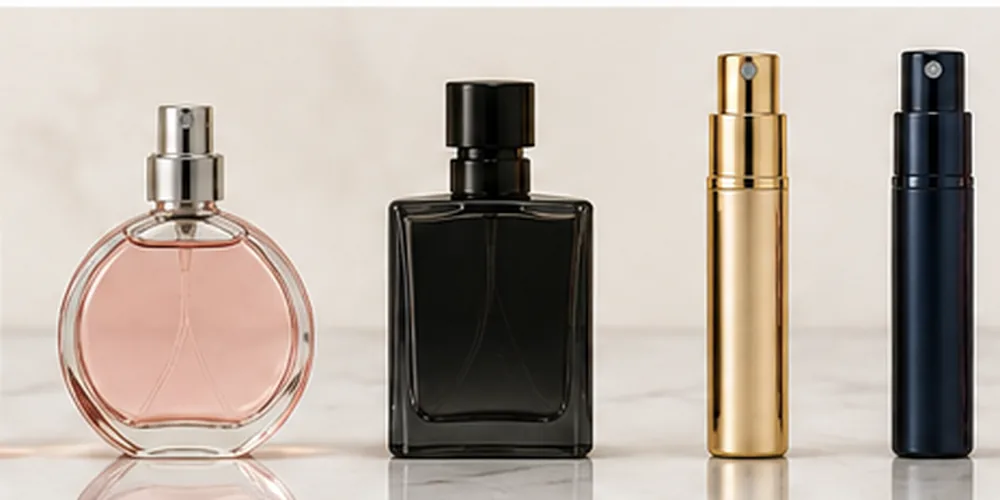
A travel perfume atomizer is a compact package that holds a smaller amount of fragrance. Common refill routes include:
- removing a screw closure and pouring through a small funnel;
- transferring fragrance with a pipette or syringe suited to the product;
- pumping through a valve on the base of the travel container;
- replacing an internal cartridge;
- filling from a larger brand refill bottle.
Bottom-fill formats depend on a seal between the travel unit and the source-bottle stem. Compatibility should be confirmed across the source bottles customers will actually use. A universal claim is risky when stem diameters and pump constructions vary.
Sample And Scent-Trial Atomizers
Sample sprays commonly hold small volumes and are used for trials, subscription kits or scent collections. A small vial creates little room for labeling, so the outer card, sleeve or carton may carry most regulatory and brand information.
Sampling hardware should represent the intended fragrance experience. A weak stream, oversized droplet or difficult actuator can give a poor first impression even when the formula is unchanged.
Vintage Bulb Atomizers
Traditional bulb atomizers use a squeezable air bulb and tube. They create a recognizable presentation but differ from modern finger pumps in sealing, portability and spray control. Evaluate evaporation, accidental activation and display conditions before selecting one for commercial distribution.
Primary, Secondary and Shipping Packaging
Perfume atomizer packaging works across three levels.
Primary Packaging
The bottle, pump, gasket and cap directly contain or dispense the fragrance. These components carry the highest compatibility and leakage responsibility.
Secondary Packaging
A folding carton, rigid box, sleeve or presentation case surrounds the primary pack. It provides printable space for product identity, ingredients, quantity, business information, batch coding and brand artwork. It can also reduce light exposure and protect decoration.
Shipping Packaging
Corrugated cases, dividers, molded-fiber parts, paperboard partitions or selected cushioning materials protect units through fulfillment and distribution. The shipping system must control glass-to-glass contact, cap movement and pressure on the actuator.
Packaging NextGen treats these levels as one system because a premium bottle can still arrive damaged inside a weak carton or poorly divided case.
Choosing Bottle Materials for Perfume Atomizers
Glass
Glass offers clarity, weight, barrier performance and many decoration choices. Clear glass shows the liquid, while colored or coated glass can change the visual identity and light exposure. Heavy bases add presence but also increase shipment weight and drop energy.
Inspect glass for:
- neck dimensions and perpendicularity;
- capacity and overflow variation;
- stress, chips, cracks and sharp defects;
- base stability;
- wall distribution;
- decoration adhesion;
- compatibility with the pump crimp or thread.
Plastic
Plastic bottles or inner cartridges can reduce mass and breakage. Resin choice should be based on formula compatibility, barrier need, clarity, squeeze resistance, decoration and local recovery routes. A generic statement such as “plastic compatible” is not enough. Test the precise resin, colorant and supplier part.
Aluminum And Other Metals
Aluminum may be used for an outer sleeve, actuator, ferrule, collar or container. It can create a cool touch and a metallic appearance. When metal contacts the formula, the complete contact system needs evaluation for corrosion, discoloration, odor change and seal performance.
Elastomers And Small Internal Parts
Gaskets, valves and seals have small mass but high responsibility. Fragrance oils and alcohol can cause swelling, hardening, softening, extraction or odor change in an unsuitable material. Obtain supplier compatibility data, then run tests with the final formula and production parts.
Fragrance Formula Compatibility
Perfume is not one standard liquid. Eau de parfum, eau de toilette, alcohol-free fragrance, water-based mist and fragrance oil can place different demands on a pump.
Compatibility work should look for:
- weight loss or evaporation;
- gasket swelling or shrinkage;
- pump sticking or slow return;
- change in dose output;
- color shift;
- visible particles or haze;
- corrosion;
- odor change;
- leaking at the neck or nozzle;
- cracked or softened plastic;
- coating, label or adhesive damage after contact with drips.
Run the study with the actual formula, not only ethanol or water. Fragrance ingredients can behave differently from the base solvent. Use upright, horizontal and inverted orientations where they reflect storage or shipping risk.
Neck Finish and Pump Attachment
The bottle neck and pump attachment must come from matching standards or from a validated custom specification. Common attachment families include crimp, threaded and snap-on formats, but a shared nominal diameter does not guarantee fit.
Confirm:
- neck outer diameter and bead geometry;
- sealing surface;
- thread profile and pitch where used;
- bottle-neck height;
- ferrule or closure dimensions;
- gasket thickness;
- cap and collar clearance;
- filling-line tooling;
- acceptable dimensional ranges.
Ask the bottle and pump suppliers to approve drawings together. Then validate physical production samples from the expected manufacturing cavities or molds.
Spray Output and User Experience
Dose Per Actuation
Nominal output is often expressed in microliters per full press. The delivered amount affects spray count, sensory strength and product life. Supplier literature shows that perfume pumps can be offered in multiple output levels; Silgan’s fragrance product guide lists examples such as 30, 70 and 100 microliters within selected ranges.
Measure dose by weighing a controlled number of sprays and using the formula density to convert mass where needed. Record average and variation rather than relying on one press.
Spray Pattern
Pattern describes the shape and distribution of droplets at a chosen distance. A fragrance brand may prefer a compact spray for pulse points or a wider mist for body application. Assess symmetry, wet center, large droplets and stray jets.
Prime And Re-Prime
Prime count is the number of presses needed before the first acceptable spray. Re-prime tests evaluate performance after storage or a period without use. Set an acceptance rule for a full spray, not merely any liquid leaving the nozzle.
Actuation Force And Feel
The pump should be comfortable for the intended user and package size. Measure the force and travel of the actuator. Check cap clearance, finger access and whether the bottle remains stable during a press.
Noise And Return
Clicks, squeaks, slow return or sticking can affect perceived quality. Evaluate repeated use at expected temperatures and after compatibility aging.
How to Test Perfume Atomizers Before Production
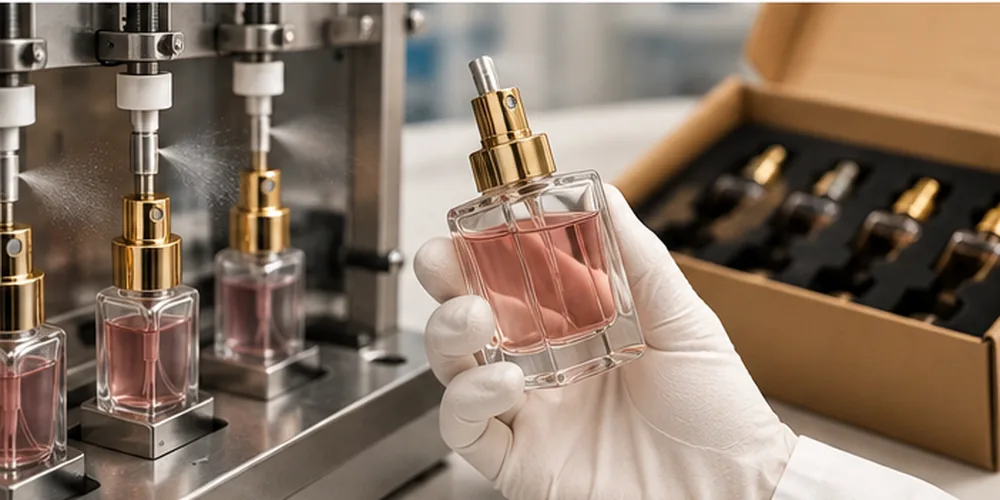
1. Dimensional Inspection
Measure bottle necks, pump closures, gaskets, collars and caps against approved drawings. Use samples across production cavities and lots, not one hand-selected set.
2. Compatibility Aging
Fill production-intent packages with the final fragrance and store them under defined time and temperature conditions. Include control samples. Record package weight, appearance, odor and pump performance at planned intervals.
Accelerated testing can reveal problems sooner, but it does not automatically predict every real-time result. Pair it with a real-time program suited to the product life.
3. Leakage And Weight-Loss Testing
Test packages upright, horizontal and inverted where relevant. Inspect the neck, actuator and cap. Track mass loss with a calibrated balance. Set limits before the test begins.
4. Pump Output Testing
Prime the pump using a written procedure, collect a defined number of full strokes and calculate average dose plus variation. Repeat across several units and stages of container emptying.
5. Spray-Pattern Review
Spray against a suitable collection surface or use imaging equipment. Keep distance, angle and actuation consistent. Review pattern width, symmetry, large droplets and central wetness.
6. Prime, Re-Prime And Evacuation
Measure initial prime strokes, recovery after storage and usable product remaining when the pump can no longer dispense correctly. Test the bottle at different angles if consumers may use it that way.
7. Actuation And Cap Testing
Measure pump force, cap removal, cap retention and resistance to accidental pressing. Cycle the cap and pump for the expected use count.
8. Drop And Transit Testing
Test the filled bottle inside its finished carton and the cartons inside the shipping case. The program should reflect unit weight, distribution route, parcel handling and pallet conditions. Inspect glass, pump, cap, decoration, carton and leakage after the test.
9. Decoration Resistance
Run rub, scratch, adhesion and product-contact tests on labels, inks, coatings, foil and metallized parts. Fragrance drips can damage a finish that survives a dry rub.
10. Filling-Line Trial
Confirm pump feeding, dip-tube handling, fill accuracy, crimp or torque, cap placement, coding, inspection and reject handling at production speed. A lab sample assembled by hand cannot prove line performance.
Printing and Decoration for Perfume Atomizers
The bottle, pump and carton offer different print surfaces. Each needs its own artwork and production limits.
Direct Screen Printing
Screen printing places ink directly on glass, plastic or a coated surface. It can produce solid logos and text, but bottle curvature, ink adhesion, registration and curing need control. Test the printed bottle after product contact and transport.
Pad Printing
Pad printing transfers artwork with a flexible pad and can reach curved or small areas. It is suited to selected logos and marks rather than every full-wrap design.
Hot Foil And Metallized Decoration
Foil details can be applied to cartons, caps, collars or certain prepared bottle surfaces. Specify the substrate, adhesive system, artwork line limits and scuff test. A gold shade on the cap may not visually match foil on the carton, so approve the full set together.
Labels
Pressure-sensitive labels allow detailed graphics and shorter production routes. Clear film can create a no-label look, while paper labels add texture. Check adhesive clarity, edge lift, bubbles, application tolerance and resistance to fragrance drips.
Coating, Frosting And Color
Bottle coatings can create opaque, translucent, gradient, matte or glossy effects. These finishes change how color is seen. When the package uses a named brand color, follow the PMS colors in packaging printing and approve the color on the actual glass, metal and paperboard surfaces.
Decoration Artwork Checklist
- Use the supplier’s current printable-area drawing.
- Mark seams, curvature limits and no-print zones.
- Separate white, spot color, varnish and technical layers.
- Include viewing orientation and bottle front.
- Set minimum line and type sizes for the chosen process.
- Keep batch-code space free from busy graphics.
- Approve color and finish on production-intent material.
- Test decorated parts after filling and transport.
Bottle artwork may use a technical drawing rather than a box template. The same file-control principles described bottle packaging and printing guide still apply.
Designing the Outer Carton
A fragrance carton provides protection, information and shelf presentation. It should be sized from the finished bottle, including cap, collar, decoration and manufacturing tolerances.
Folding Cartons
Folding cartons suit many retail fragrances. SBS and selected FBB grades provide smooth print surfaces, while other boards offer different stiffness, fiber composition and reverse color. Compare the intended paperboard grade before locking the print profile or structural design.
Rigid Boxes
Rigid boxes may be used for high-price sets, gifts or limited releases. They add material, weight and shipping volume, so their use should have a clear protective or presentation reason.
Inserts
An insert can center the bottle, protect the pump and prevent movement. Options include folded paperboard, molded fiber, corrugated structures and selected foams. Check removal force, cap pressure, glass contact points and recycling instructions.
Dieline And Safe Areas
Build artwork on the converter’s approved packaging dieline. Keep required copy away from folds, glue areas, openings and seams. Confirm bleed, trapping, barcode quiet zones and code areas before proof approval.
Mockup Versus Production Sample
A 3D rendering helps review hierarchy and panel flow, but it cannot prove bottle fit, color, glass protection or pump clearance. A 3D packaging mockup should be followed by a physical sample using production-intent dimensions and materials.
U.S. Labeling for Perfume Atomizer Packaging
Perfume sold for application to the body is generally regulated as a cosmetic in the United States. Packaging teams should obtain regulatory review for the final formula, claims, label and sales route.
FDA’s current summary of cosmetic labeling requirements explains that the principal display panel must identify the product and show an accurate net-quantity statement. The information panel commonly carries the marketer’s name and place of business plus the ingredient declaration.
The final layout may need space for:
- product identity;
- net contents in required U.S. units, with metric quantity where used;
- ingredient declaration;
- manufacturer, packer or distributor name and address;
- an appropriate distributor statement where applicable;
- country-of-origin marking for imported articles;
- warnings or directions needed for safe use;
- lot or batch code;
- responsible-person contact information required by applicable law;
- barcode and internal supply-chain data.
FDA notes that fragrance mixtures may generally be declared as “Fragrance” in the ingredient list under U.S. cosmetic rules, although other ingredients and market requirements still need review. See the agency’s fragrance-in-cosmetics guidance for current context.
MoCRA added registration, product-listing, safety-substantiation and adverse-event duties for many cosmetic businesses, with specified exemptions and ongoing rulemaking in certain areas.
Travel and Shipping Considerations
Carry-On Travel
The U.S. Transportation Security Administration states that perfume may be carried in a carry-on bag when each container is no more than 3.4 ounces or 100 milliliters and follows the liquids rule.
This is a passenger-screening rule, not a statement that every atomizer is leakproof or accepted by every postal or courier service.
Mailing Alcohol-Based Perfume
Many perfumes contain alcohol and can fall under hazardous-material transportation rules. Eligibility can depend on formula classification, flash point, amount, package design, destination, mode and carrier authorization.
Brands and fulfillment teams should classify the finished fragrance and obtain current carrier instructions before choosing air, surface, domestic or international service. Do not copy a competitor’s shipping label or assume a small bottle is exempt.
Shipping-Pack Design
The shipper may need:
- a secure primary receptacle;
- closure protection;
- absorbent or cushioning material where required;
- separation between glass units;
- a strong outer package;
- orientation, limited-quantity or hazardous-material marks where applicable;
- documented packing instructions;
- trained personnel where regulations require them.
Regulatory classification should be handled by qualified shipping personnel. This article is not a hazardous-material shipping authorization.
Are Refillable Perfume Atomizers More Sustainable?
Refillable perfume atomizers can reduce the number of full dispenser assemblies purchased when customers actually reuse them and a workable refill supply exists. The result depends on component mass, refill format, transport, breakage, cleaning, recovery and number of reuse cycles.
Ask these questions before making a claim:
- Can customers buy or obtain the refill easily?
- Can the package be opened and closed without tools?
- Does the seal survive the claimed reuse count?
- Are cleaning instructions necessary and realistic?
- Does refilling increase contamination or fragrance-mixing risk?
- Can components enter local recovery systems?
- Does the refill pack use less material for the delivered quantity?
- Is the claim about the complete package or only one component?
Avoid broad statements based only on the word “refillable.” State the refill route, intended reuse and claim boundaries.
How Brands Should Specify Perfume Atomizers
Send suppliers a specification that covers performance and presentation.
| Specification area | Details to include |
| Formula | Fragrance type, alcohol level, viscosity range and fill temperature |
| Bottle | Material, capacity, overflow, neck drawing, color, weight and supplier |
| Pump | Supplier code, attachment, nominal dose, insert, gasket and dip tube |
| Spray | Target pattern, distance, prime count and acceptable dose range |
| Closure | Crimp dimensions, torque or snap retention |
| Cap and collar | Material, finish, fit, orientation and removal force |
| Decoration | Process, colors, artwork version, adhesion and product-contact test |
| Carton | Structure, board, print, finish, insert and batch-code location |
| Quality | Sampling plan, test methods, limits and approved reference samples |
| Logistics | Case count, dividers, shipping route and applicable marks |
Packaging NextGen recommends approving a complete golden sample only after the filled bottle, pump, cap, decoration, carton and shipping configuration have passed the agreed checks.
Common Mistakes When Buying Atomizers
Ordering Bottles And Pumps Separately Without Fit Approval
Matching nominal sizes do not prove that the seal, attachment and filling-line setup will work together.
Selecting From Appearance Alone
A pump can look right and still deliver the wrong dose, require too much force or react with the formula.
Testing With Water Instead Of The Final Fragrance
Water trials can help with early equipment checks, but they do not replace compatibility and spray testing with the actual product.
Ignoring Dip-Tube Geometry
An incorrect tube can restrict flow or leave too much fragrance behind.
Calling Every Small Spray “Tsa Approved”
TSA publishes passenger liquid limits. It does not certify the mechanical quality of individual atomizers.
Approving Bottle Color On A Screen
Glass, coating, metal and paperboard reflect light differently. Approve physical color standards and completed samples.
Treating Refillable As A Complete Environmental Claim
The refill method, availability and real reuse pattern determine whether the claim gives buyers useful information.
Testing The Bottle Without Its Carton
Cap pressure, insert fit and transport movement appear only when the complete pack is evaluated.
Perfume Atomizer Buyer Checklist
Before placing a production order, confirm:
- The final fragrance formula has been tested with every product-contact component.
- Bottle and pump drawings match.
- Neck attachment and filling-line tooling are approved.
- Nominal dose and acceptable variation are documented.
- Spray pattern, prime, re-prime and evacuation have acceptance limits.
- Gasket, dip tube and internal plastics passed compatibility work.
- Cap retention and accidental-press protection are checked.
- Bottle decoration survives rub and fragrance contact.
- Carton dimensions use production tolerances.
- The insert does not press the actuator or damage decoration.
- Regulatory copy has been reviewed for the U.S. market.
- The finished shipping classification has been confirmed with the carrier.
- Filled packages passed the agreed distribution tests.
- Refill and environmental statements have evidence and clear limits.
- Approved samples, drawings, test reports and artwork versions are retained.
Frequently Asked Questions
What Is A Perfume Atomizer?
A perfume atomizer is a dispensing package that turns liquid fragrance into a mist. It usually combines a bottle, finger pump, actuator, nozzle, dip tube, gasket, attachment and cap.
How Do Perfume Atomizers Create A Fine Mist?
Pressing the actuator pushes a small amount of fragrance through internal channels and a small nozzle opening. The liquid exits as droplets whose pattern depends on pump design, formula and actuation.
What Is The Difference Between An Atomizer And A Spray Bottle?
Atomizer commonly refers to a fine-mist dispensing system, especially for fragrance. Spray bottle is a wider term that can include fine mists, stream sprayers and trigger packages used for many products.
Are All Perfume Atomizers Refillable?
No. Crimp-on retail pumps are commonly intended to remain sealed, while screw-on, cartridge and bottom-fill travel systems may allow refilling. Confirm the package design and instructions.
What Size Is A Travel Perfume Atomizer?
Travel formats are often much smaller than full-size fragrance bottles, with examples commonly ranging from a few milliliters into the low tens of milliliters. The best capacity depends on trip length, dose output, refill method and applicable travel rules.
Can I Put Any Perfume In A Refillable Atomizer?
Do not assume universal compatibility. Formula ingredients can interact with seals, plastics, coatings and transfer valves. Check supplier guidance and test valuable or unusual formulas before extended storage.
Why Does A Perfume Atomizer Leak?
Possible causes include an incompatible gasket, poor crimp, low closure torque, damaged thread, overfill, valve contamination, loose travel-fill seal, temperature change or impact. Inspect the leak location before changing the entire package.
How Many Sprays Are In A Perfume Atomizer?
The number depends on filled volume, pump dose, priming loss and remaining liquid when the pump stops dispensing correctly. Calculate it from measured average output rather than using a universal sprays-per-milliliter claim.
Is A Perfume Atomizer Allowed In Carry-On Luggage?
TSA permits perfume in carry-on baggage when each container meets the current 3.4-ounce or 100-milliliter liquid limit and follows the liquids rule. Check the current TSA page before traveling.
What Packaging Protects A Glass Perfume Atomizer?
A correctly sized folding carton or rigid box with a tested insert can limit movement and protect the cap, pump and decoration. Corrugated cases and dividers protect multiple retail units during distribution.
Can Perfume Atomizer Bottles Be Printed Directly?
Yes. Depending on the material and design, brands may use screen printing, pad printing, coatings, labels, hot foil or decoration on collars and caps. Adhesion and fragrance-contact testing are necessary.
What Should A Perfume Brand Test Before Launch?
Test formula compatibility, leakage, weight loss, dose, spray pattern, prime, re-prime, actuation force, cap retention, decoration resistance, drop exposure, transit conditions and filling-line performance.
Final Answer
So, what is a perfume atomizer from a packaging perspective? It is the complete system that stores fragrance, seals it, meters each press, creates the spray and survives retail use and distribution. The nozzle may create the visible mist, but the bottle neck, gasket, pump engine, dip tube, cap, decoration, carton and shipping case determine whether that experience remains reliable.
Choose components as a matched set, test them with the final formula and approve the filled, decorated package rather than separate catalog samples. Packaging NextGen advises brands to record measurable requirements before ordering: bottle drawing, attachment, dose, spray pattern, compatibility limits, carton fit, label copy and shipping route. That record gives designers, fillers, converters and quality teams one production reference.
Editorial note: Packaging NextGen provides independent packaging education and is not affiliated with the manufacturers or regulators linked in this article. Supplier specifications and regulations can change. Confirm current requirements for the exact formula, package, market and transport route before production.