
A molded pulp insert may look like a simple piece of pressed paper, but its performance depends on fiber selection, wall thickness, cavity design, pressing method and any treatment added after molding. Processed molded pulp packaging goes one step beyond standard pulp trays by adding treatments such as hot pressing, coloring, printing, coating, trimming or embossing. These processes can improve surface quality, product fit, moisture resistance and branding, but they can also affect cost and recyclability.
At Packaging NextGen, we examine packaging materials from both a design and buyer perspective. This guide explains what processed molded pulp is, how it is produced, where it is used and what brands should verify before placing a large order.
What Is Processed Molded Pulp Packaging?
Processed molded pulp packaging is a molded fiber product that receives one or more secondary treatments after, or alongside, its main molding process. It is commonly used for product trays, protective inserts, bottle holders, electronics packaging, cosmetic sets, food trays and retail gift boxes.
The base material may include:
- Recycled paper
- Recycled cardboard
- Sugarcane bagasse
- Bamboo fiber
- Virgin wood fiber
- Blended cellulose fibers
The molded component may then receive an additional process such as hot pressing, trimming, printing, coloring, coating, perforation, embossing or the addition of a special barrier.
In simple terms, processed molded pulp is not defined only by the fiber used. It is defined by what happens to the molded item after or during the primary forming stage.
Is Processed Molded Pulp a Separate Type?
Yes, the molded fiber industry generally classifies processed molded fiber as Type 4. However, it is important to understand what this classification means.
According to the International Molded Fiber Association, Type 4 products are usually based on an existing Type 1, Type 2 or Type 3 molded product. A secondary or special treatment is then applied to change its surface, shape, performance or presentation.
This makes Type 4 different from the first three categories, which have their own primary forming and drying methods.
The Four Types of Molded Pulp
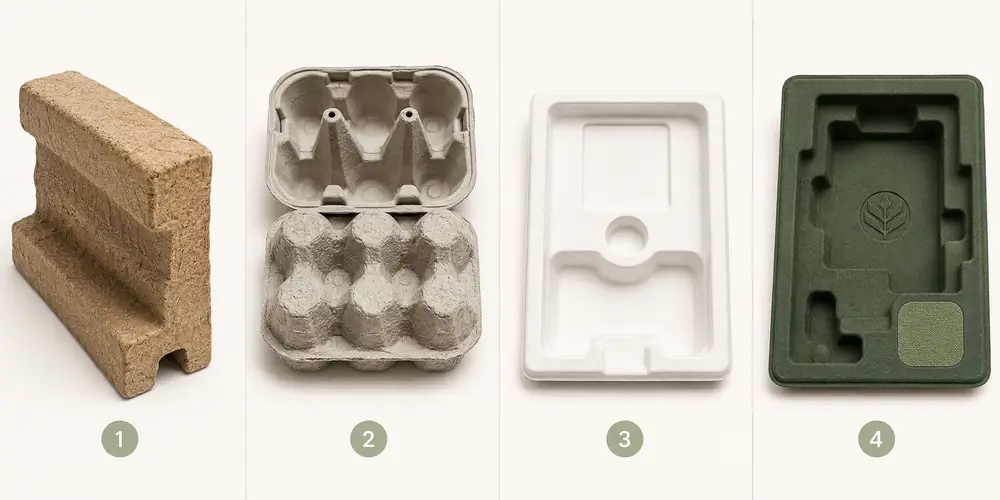
| Type | Common name | Typical wall thickness | Surface | Common applications |
| Type 1 | Thick-wall molded pulp | 5–10 mm | One smoother side and one rough side | Machinery parts, furniture supports and heavy products |
| Type 2 | Transfer molded pulp | 3–5 mm | Relatively smooth on one side | Egg cartons, drink trays, appliances and electronics |
| Type 3 | Thermoformed or thin-wall fiber | 2–4 mm | Smooth, dense and detailed | Cosmetics, medical trays and retail products |
| Type 4 | Processed molded fiber | Depends on the base type | Depends on treatment | Branded inserts, coated trays and precision packaging |
Some suppliers use terms such as wet press and dry press differently. Buyers should therefore request samples and written specifications instead of selecting a material based only on its commercial name.
How Is Processed Molded Pulp Made?

The exact manufacturing sequence varies by fiber, equipment and required finish. Most production follows these general stages.
1. Fiber Selection
The manufacturer selects recycled paper, cardboard, bagasse, bamboo or another cellulose source. The fiber choice affects color, surface texture, strength, price and suitability for direct food contact.
Recycled cardboard usually creates a grey or natural appearance. Bagasse can produce a lighter-colored tray, while cleaner fiber grades may be selected when appearance or hygiene standards are more important.
2. Pulping and Slurry Preparation
The fibers are mixed with water to create a slurry. Contaminants and non-fiber particles are removed. Manufacturers may adjust fiber length, water ratio and additives according to the required strength and forming quality.
Dyes or performance additives may also be introduced at this stage. Brands should ask what additives are being used and how they affect recycling, composting and product-contact safety.
3. Vacuum Forming
A screened mold is placed into the pulp slurry. Vacuum pressure draws fibers onto the mold surface and removes part of the water.
The cavity shape, wall thickness, ribs and product-support points begin forming during this stage. Poorly planned geometry can cause weak corners, uneven walls or difficulty removing the product from its insert.
4. Transfer and Pressing
The wet component is transferred to another mold or pressing station. Depending on the selected process, pressure and heat may be used to increase density, improve dimensions and create a smoother surface.
Type 3 thermoformed fiber is dried within heated molds. Other molded pulp products may be formed first, dried separately and pressed afterward.
5. Drying
The tray is dried until it reaches a controlled moisture level. Drying may take place in an oven, heated mold or another controlled system.
Uneven drying can cause warping, shrinkage or inconsistent dimensions. These issues are especially important when the insert must hold bottles, electronics or fragile products securely.
6. Secondary Processing
The molded item may now receive the treatment that places it within the processed or Type 4 category. This could include coating, printing, coloring, trimming, embossing, foil application or additional pressing.
7. Inspection and Testing
Finished parts should be checked for:
- Dimensions and product fit
- Wall-thickness consistency
- Moisture level
- Surface defects
- Color variation
- Nesting ability
- Compression strength
- Product removal
- Transit protection
For shipping applications, a loaded box should also be tested rather than assessing the pulp insert alone.
Common Secondary Treatments
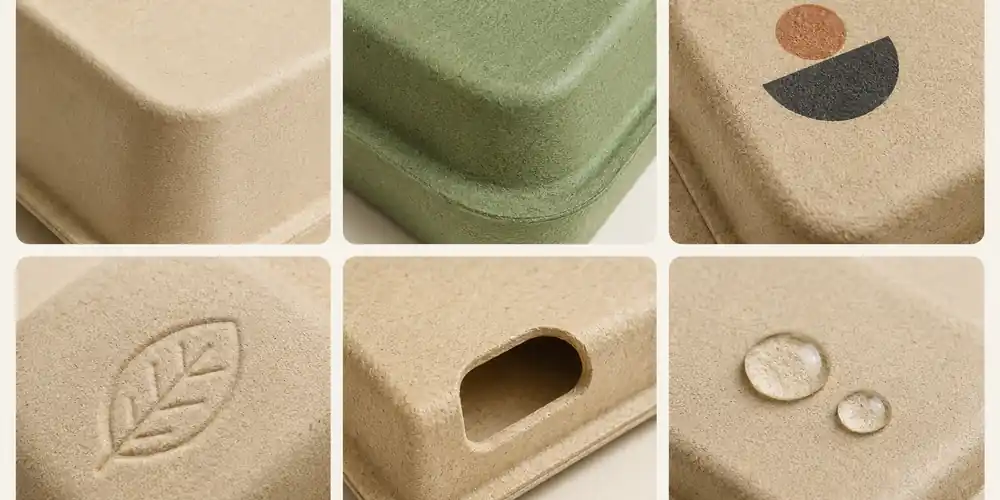
Hot or After Pressing
A formed pulp component can be pressed again using heat and pressure. This can produce a denser surface, reduce visible roughness and improve dimensional consistency.
Hot pressing is often selected for cosmetics, personal care, electronics and retail gift sets where product presentation matters.
Colored Slurry
Color can be added to the pulp mixture before molding. Because the color runs through the material, small scratches may be less noticeable than they would be on a surface-only print.
Color matching should include an acceptable tolerance because natural fiber can affect the final shade.
Printing
Screen, pad or UV printing can add logos, product names, symbols and instructions. The printing method should be selected according to the pulp surface, artwork detail and ink requirements.
Brands should verify whether the selected ink affects repulping, compostability or food-contact suitability.
Embossing and Debossing
A logo or symbol can be raised or recessed through the mold or a secondary pressing stage. This provides branding without covering a large surface with ink.
Very small text and thin lines may not reproduce clearly on rough or thick-wall pulp.
Die Cutting and Perforation
Cutting can improve edges, create openings or add access points. Perforation may be used for tear-away parts, airflow or separation features.
These treatments require accurate tooling so that the cut does not weaken a product-support area.
Barrier Coatings
Coatings may be added for resistance to water, oil, grease, abrasion or staining. They can be useful for food, cosmetics and products that may leak.
However, a coating can change how the package behaves in paper recycling or composting. Ask the supplier for coating composition, testing data and disposal guidance.
Foil and Metallic Details
Hot or cold foil may be used for logos and decorative details. It can create a premium appearance, but it adds material and another production stage.
Brands planning a fiber-based packaging claim should check whether the foil layer can be separated or accepted by the intended recycling stream.
Wet Press vs Dry Press Molded Pulp

Wet press and dry press are widely used supplier terms, but specifications can differ between factories.
| Factor | Dry press | Wet press |
| Surface | Textured or rougher | Smoother and more refined |
| Thickness | Usually thicker | Usually thinner |
| Detail level | Moderate | Higher |
| Relative cost | Usually lower | Usually higher |
| Product weight | Suitable for moderate or heavier items | Often selected for lighter retail products |
| Common use | Shipping trays, appliances and drink carriers | Cosmetics, electronics and gift packaging |
| Branding | Embossing and simple print | Better surface for detailed branding |
Neither method is automatically better. The correct choice depends on product weight, visual target, order quantity, budget and transit risk.
Packaging NextGen recommends comparing physical samples under the same lighting and with the actual product inside. A smooth empty tray may appear strong but still fail if its support points do not match the product.
Where Is Processed Molded Pulp Used?
Electronics Packaging
Molded fiber trays can hold phones, chargers, headphones, smart devices and accessories. Cavities can reduce movement while ribs and raised sections support fragile areas.
Electronics brands should ask whether static sensitivity requires additional testing or a special material treatment.
Cosmetic and Personal Care Packaging
Wet-pressed trays are commonly used for bottles, jars, tubes, serum containers and gift sets. Coloring, embossing and printing can help connect the insert with the outer box.
Finger pulls are important because tightly fitted bottles may otherwise be difficult to remove.
Food and Beverage Packaging
Drink carriers, meal trays, produce trays and bottle supports may use molded fiber. Direct food contact requires appropriate material and chemical compliance.
A fiber source alone does not prove that a tray is food-safe. Dyes, coatings, processing aids and recycled content must also be evaluated.
Wine, Spirits and Glass Bottles
Thicker molded pulp inserts can reduce bottle movement and separate glass surfaces. The final pack should be checked through drop, vibration and compression testing.
PR Boxes and Product Kits
Processed molded pulp can organize several items inside one presentation box. Brands planning influencer kits can connect insert selection with these PR package ideas to improve product arrangement and opening sequence.
Appliances and Industrial Products
Thick-wall pulp can support heavier items, spare parts and equipment. It may be used as end caps, corner protection or internal blocking.
For heavier products, load paths and compression strength matter more than surface smoothness.
Design Guidelines for Molded Pulp Inserts
A good molded pulp insert begins with the product, not the outer box.
Measure the Real Product
Use physical samples or accurate CAD files. Record the maximum dimensions and any variation between production units.
Plan Product Support Points
The insert should support stronger product areas without placing excessive pressure on fragile caps, screens, switches or decorative surfaces.
Add Removal Space
Finger pulls, side openings or lifting tabs make the product easier to remove. A cavity that is too tight can damage labels or frustrate the buyer.
Allow Draft Angles
Molded parts need suitable angles so they can release from tooling and nest during shipping. Near-vertical walls may increase tooling difficulty and manufacturing defects.
Control Product Movement
Small amounts of clearance may be needed, but too much space allows vibration and impact. Samples should be tested with the final outer carton.
Use Ribs Carefully
Ribs can strengthen large flat sections and guide product placement. Excessive ribs can increase weight or make the tray appear crowded.
Check Nesting Depth
Molded pulp parts are usually shipped nested. Deep nesting can reduce freight and warehouse space, but parts should separate easily during packing.
Before approving expensive tooling, brands can use physical prototypes and 3D printing innovations in packaging to review cavity layout, access points and product placement.
Molded Pulp vs Foam, Corrugated and Plastic Inserts
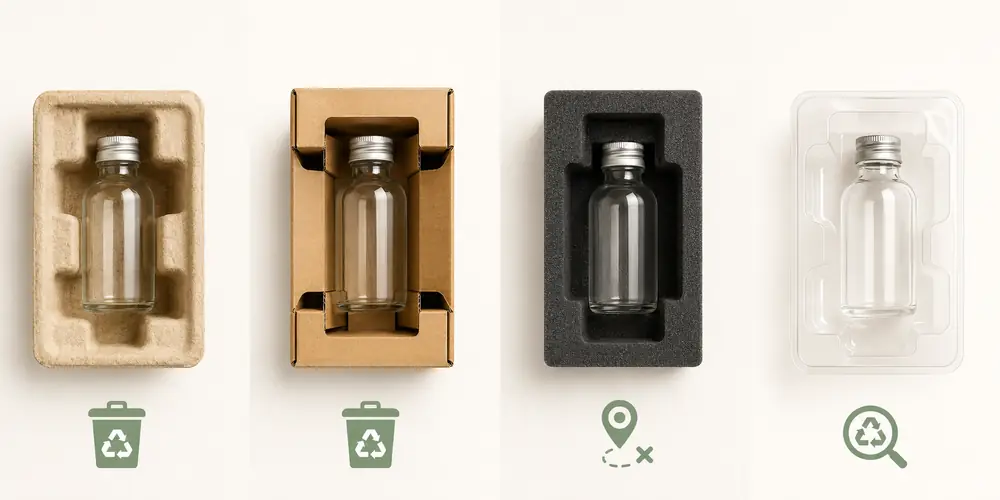
| Material | Protection | Branding | Storage | End-of-life considerations |
| Molded pulp | Good cushioning when correctly designed | Color, print and embossing available | Nestable | May enter paper recycling depending on coatings and local rules |
| Corrugated insert | Good for blocking and separation | Strong printing options | Ships flat | Commonly accepted in paper recycling |
| Foam | Strong impact protection | Limited direct printing | Often bulky | Recycling access is usually limited |
| Thermoformed plastic | Accurate shape and clear presentation | Labels and printed sleeves | Nestable | Depends on resin type and local collection |
Molded pulp should not be selected only because it appears environmentally preferable. Product damage creates additional waste, replacement shipping and cost. The selected insert must first protect the product through its real distribution route.
Is Processed Molded Pulp Recyclable?
Uncoated molded pulp made from accepted paper fibers may be recyclable in many paper-recovery systems. The result can change when the tray contains:
- Plastic barrier coatings
- Heavy wax
- Metallic foil
- Certain inks
- Adhesives
- Food or oil contamination
- Non-fiber additives
The FTC Green Guides advise businesses to qualify recyclable and compostable claims according to evidence and facility availability.
For fiber sourcing claims, FSC Chain of Custody certification can help trace certified material through the supply chain. For commercial compostability claims, relevant testing and certification such as BPI certification may be needed.
Packaging NextGen advises brands to use precise statements such as “made with 80% recycled fiber” or “recyclable where molded fiber packaging is accepted” when those statements are supported. Avoid relying only on broad green labels.
What Affects Molded Pulp Packaging Cost?
There is no single standard price because the final cost depends on:
- Product dimensions
- Insert thickness
- Fiber type
- Wet or dry pressing
- Tooling complexity
- Number of cavities
- Surface treatment
- Color matching
- Printing or embossing
- Coating requirements
- Testing requirements
- Order quantity
- Production location
- Freight and nesting efficiency
A low unit price may come with a high minimum order quantity. Buyers should compare total project cost, including tooling, samples, freight, storage and rejected units.
Molded Pulp Buyer Checklist
Before requesting a quote, prepare:
- Product samples or CAD files
- Product dimensions and weight
- Fragile and load-bearing areas
- Outer-box internal dimensions
- Required cavity count
- Preferred fiber and color
- Required wall thickness
- Print or embossing files
- Coating requirements
- Food-contact or static requirements
- Estimated order quantity
- Shipping and storage conditions
- Required drop or vibration tests
- Recycling or composting claim evidence
Ask the supplier whether tooling remains your property, how revisions are charged and how long molds are stored.
Packaging NextGen also recommends approving a loaded packaging sample rather than approving an empty insert from photographs.
Common Mistakes to Avoid
- Treating processed pulp as a separate base fiber
- Selecting wet press only because it looks smoother
- Making unsupported recyclable or compostable claims
- Ignoring coating composition
- Approving dimensions without the actual product
- Forgetting product-removal space
- Using walls that are too thin for the load
- Skipping transit testing
- Comparing unit prices without tooling and freight
- Ordering large quantities before sample approval
Final Thoughts
Processed molded pulp packaging can combine product protection, organized presentation and paper-based material choices in one insert. Its real performance, however, depends on much more than appearance. Fiber source, forming method, cavity geometry, treatment chemistry and testing all influence the final result.
Brands should identify their product risks first, compare physical samples and request evidence for any environmental statement. With accurate specifications and proper testing, molded pulp can serve electronics, cosmetics, food, bottles, product kits and industrial goods without relying on foam or rigid plastic in many applications.
Packaging NextGen helps businesses understand these choices so they can compare packaging materials, ask better supplier questions and reduce costly errors before production.
FAQs
What is processed molded pulp?
Processed molded pulp is a molded fiber product that receives an additional treatment such as hot pressing, printing, coloring, coating, trimming, embossing or die cutting.
How many types of molded pulp are there?
The industry commonly identifies four types: thick-wall, transfer molded, thermoformed or thin-wall, and processed molded fiber.
Is processed molded pulp the same as wet-pressed pulp?
No. Wet pressing describes a production method used to create a smoother pulp component. Processed molded pulp refers to a product with a secondary or special treatment and may use different base types.
Can processed molded pulp replace foam?
It can replace foam in many packaging applications when the insert is correctly designed and tested. Very fragile, heavy or static-sensitive products may require additional engineering or material treatments.
Is coated molded pulp recyclable?
It depends on the coating chemistry, coating weight and local paper-recycling system. Request written recycling information from the supplier and avoid an absolute claim without evidence.
Is molded pulp compostable?
Some uncoated fiber packaging may break down under suitable conditions, but not every molded pulp product is certified for home or commercial composting. Dyes, coatings and additives must be considered.
What is molded pulp made from?
Common sources include recycled paper, recycled cardboard, sugarcane bagasse, bamboo and virgin wood fiber. Manufacturers may blend multiple fibers to achieve the required strength and surface.
Which molded pulp type is best for premium packaging?
Thermoformed or wet-pressed fiber is often selected for smoother retail inserts. The final choice should also consider product weight, cost, branding method and required protection.
How much does molded pulp tooling cost?
Tooling cost depends on tray size, cavity detail, mold material, production method and the number of tools required. Buyers should request separate prices for prototypes, production tooling and later revisions.
What information is needed for a molded pulp quote?
Suppliers usually need product measurements or samples, weight, cavity count, box dimensions, material preference, finish requirements, quantity and shipping destination.
5 Responses