
Polyethylene foam can look like a simple block of plastic bubbles, yet its real packaging value comes from controlled deformation. During a drop, the cells compress and slow the product over a short distance. Too little compression allows the item to bottom out; too little loading makes a stiff pad pass a sharp shock into the product. That is why choosing foam by color, thickness or density alone often creates a heavy insert without proving protection.
This guide approaches PE foam as part of a complete distribution package. It explains material types, closed-cell behavior, density, cushioning curves, insert geometry, fabrication, electronics protection, branding, testing, costs and environmental claims. The goal is a repeatable specification, not a guess based on a sample that feels soft in the hand.
Polyethylene foam is a lightweight cellular material made from polyethylene resin and a controlled expansion process. Most packaging grades have predominantly closed cells, giving them low water uptake, resilience and useful shock-cushioning properties. Packaging formats include thin rolls, pouches, profiles, planks, laminated blocks and fabricated inserts.
Key Takeaways
- Polyethylene foam is usually a closed-cell protective material, but grade details vary.
- EPE, non-cross-linked PE, XLPE and IXPE are related terms, not interchangeable specifications.
- Density measures mass per volume; it does not directly state softness or safe product weight.
- Cushioning must be matched to product fragility, drop height, static load, thickness and repeated impacts.
- A foam insert and its corrugated box should be designed and tested as one system.
- Electronics may need low-charging, dissipative, conductive and shielding properties beyond a colored foam insert.
- Recycling claims require a real collection and processing route for the finished part.
What Is Polyethylene Foam?
Polyethylene foam is produced by creating gas cells inside polyethylene. Depending on the grade and process, the result can be a flexible roll, an extruded plank, a laminated block, a molded shape or a fine-cell sheet. The material contains much less solid polymer than an unfoamed sheet of the same dimensions, so it can provide cushioning with relatively low package weight.
The cells in packaging PE foam are generally closed rather than openly connected. Closed cells limit rapid movement of air and liquid through the material, helping the foam resist water uptake and hold its shape during short-term loading. Cutting, perforating or routing opens cells at the surface, so finished-part behavior should still be tested rather than inferred from the phrase “closed cell.”
Polyethylene foam can serve several packaging roles:
- Absorbing and managing impact energy
- Reducing vibration transmitted to a product
- Blocking movement inside a case
- Bracing a product away from box walls
- Separating stacked parts
- Protecting decorated or polished surfaces
- Filling controlled gaps
- Providing thermal resistance in a wider insulated system
- Holding components in an organized presentation
One foam grade will not perform every role equally well. Thin roll foam can prevent scuffs but may provide little drop protection for a heavy instrument. A thick plank can manage impact but may be excessive for interleaving finished panels.
How Polyethylene Foam Is Made
The exact process depends on the product family. Resin, additives and a blowing system are mixed and expanded to form cells. Extrusion can produce continuous sheet, roll or plank. Layers may be heat-laminated into thicker billets, while other processes create molded or cross-linked structures.
Key production variables include:
- Polyethylene grade and blend
- Blowing method
- Cell size and uniformity
- Expansion ratio
- Cross-linking route, if used
- Sheet or plank thickness
- Lamination quality
- Skin formation
- Additives for color, static control, flame behavior or UV exposure
Two foams sold at the same nominal density can differ in cell structure, compression response and recovery. Packaging approval should refer to a manufacturer, grade, density tolerance and required test data, not only “2 lb PE foam.”
Types of Polyethylene Foam
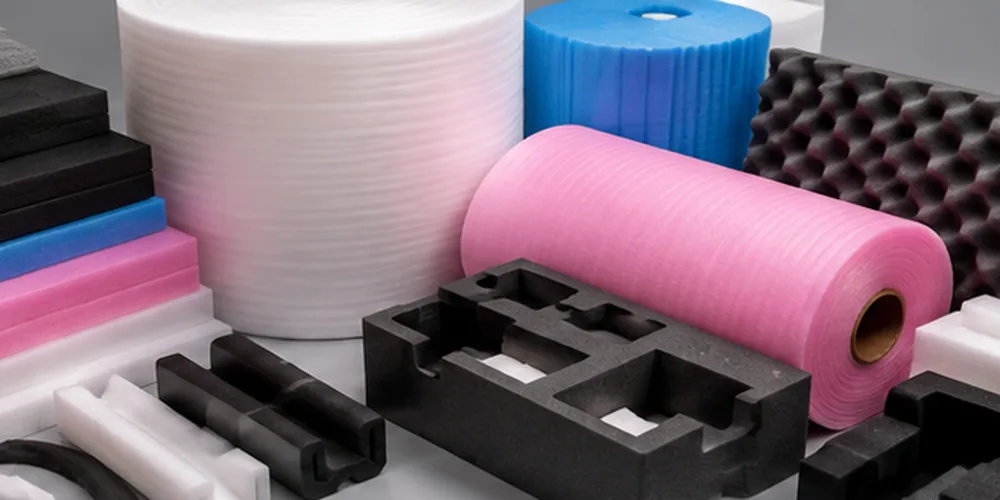
Non-Cross-Linked Polyethylene Foam
Non-cross-linked PE foam is commonly extruded into sheets, rolls and planks. It can provide economical cushioning, blocking, bracing and surface protection. Its cells may be coarser than those of many cross-linked grades, and thick planks are often built by laminating layers.
This material is widely used for end caps, corner blocks, roll wrap, furniture protection, industrial parts and shipping-case inserts. It is often a practical starting point where the insert does not need a very fine presentation surface.
Expanded Polyethylene Foam And Epe
EPE means expanded polyethylene, but suppliers do not always use the abbreviation for exactly the same structure. It may describe extruded expanded sheet or other expanded PE products. Do not approve material from “EPE” alone. Ask whether the foam is cross-linked, how it is produced, what density and tolerance apply, and which cushioning data belong to that exact grade.
In packaging, EPE commonly appears as roll foam, plank, tubing, corner profiles and fabricated cushioning. It can be reused when the package and handling loop allow it.
Cross-Linked Polyethylene Foam And Xlpe
Cross-linking connects polymer chains into a network before or during foaming. XLPE grades often have finer cells, a smoother surface, good dimensional consistency and strong recovery. They can suit presentation cases, medical or optical equipment, reusable kits and products with sensitive finished surfaces.
Cross-linked foam may cost more than a basic non-cross-linked grade. That premium has value only when fine cells, color, surface finish, durability, thermoforming response or tighter fabrication are required.
Irradiation Cross-Linked Polyethylene Foam And Ixpe
IXPE is cross-linked using an electron-beam process. It is associated with fine, even cells and thin sheet applications. Chemical cross-linking and irradiation cross-linking can create different processing and surface characteristics, but the method name still does not replace grade-level performance data.
For packaging, compare actual density, compression, set, tensile, tear, surface, cleanliness and cushioning data. A supplier should also disclose restrictions for the intended product or market.
Laminated Polyethylene Foam Plank
Plank thickness can be built by bonding multiple layers with heat or another qualified process. Lamination allows fabricators to create deep inserts, end caps and blocking pieces from standard stock.
Inspect laminate lines after cutting. A weak bond can separate during a drop or repeated handling. The direction and placement of the layers can also affect the appearance of routed pockets.
Molded Pe Foam Parts
Molded parts can reduce assembly and repeat a complex geometry at volume. Tooling, shrinkage, draft, wall thickness and cell behavior must be planned early. A molded part may lower unit labor after launch but cost more to tool and change than a fabricated insert.
EPE vs XLPE Foam
| Area | EPE or common non-cross-linked PE | XLPE or cross-linked PE |
| Cell appearance | Often coarser | Commonly finer and more even |
| Surface | Can show extrusion or laminate texture | Often smoother |
| Cost | Often lower | Often higher |
| Fabrication | Good for planks, blocks, profiles and roll foam | Good for precise inserts, thin sheets and presentation surfaces |
| Recovery | Grade-dependent | Often selected for repeated compression and dimensional consistency |
| Color range | Common packaging colors | Broad presentation and technical options may be available |
| Best starting use | Shipping cushions, blocking, bracing and surface wrap | Reusable cases, polished products, kits and precise cavities |
This table describes common market patterns, not universal rules. A well-designed non-cross-linked grade can outperform a poorly selected cross-linked grade in a specific drop condition.
Polyethylene Foam Forms for Packaging
Rolls And Sheets
Thin foam rolls protect surfaces, separate parts and wrap products. Perforated rolls can speed manual packing, while non-perforated stock reduces fixed cut-length waste when product sizes vary.
Roll foam should not be treated as void fill for every package. Loose layers can shift, and several thin wraps do not necessarily reproduce the performance of one tested cushion.
Planks And Blocks
Plank foam supports fabricated end caps, pads and inserts. Stock density, thickness, laminate direction and usable sheet size affect yield and cost.
Pouches And Bags
Foam pouches can protect small decorated parts from scuffing. The seam, closure and product fit determine whether the pouch stays in place. A pouch is surface protection, not automatically a shipping cushion.
Profiles And Edge Protectors
U-channels, L-profiles, corner pieces and tubing can protect frames, panels, glass, furniture and long edges. The profile must match the edge thickness and remain engaged through vibration and handling.
Fabricated Inserts
Custom cavities can locate a product, control orientation and improve presentation. Inserts may include finger notches, accessory pockets, cable channels, lid pads and contrasting top layers.
Presentation inserts are common in sales kits and influencer mailers. PR package ideas provides wider context for organizing the product, printed message and opening sequence.
Adhesive-Backed Foam
Pressure-sensitive adhesive can hold a pad inside a carton, case or component. Adhesive choice depends on foam surface, box coating, temperature, time and stress. Test peel, shear, aging and residue on both materials.
Polyethylene Foam Density Explained
Density is foam mass divided by volume. U.S. suppliers often use pounds per cubic foot, written as lb/ft³ or pcf. Other markets use kilograms per cubic meter.
1 lb/ft³ ≈ 16.02 kg/m³
| Density in lb/ft³ | Approximate kg/m³ |
| 1.0 | 16.0 |
| 1.5 | 24.0 |
| 2.0 | 32.0 |
| 4.0 | 64.1 |
| 6.0 | 96.1 |
| 9.0 | 144.2 |
These conversions do not create fixed “light,” “medium” or “heavy-duty” categories. Supplier ranges and grade behavior differ.
Density Is Not Hardness
A higher-density foam contains more polymer per unit volume, but hardness and compression response also depend on cell structure, resin, cross-linking and manufacturing. Ask for compression data at stated deflections rather than using density as a substitute.
Higher Density Is Not Always Safer
Foam must compress enough to lengthen the stopping distance during an impact. If the cushion is too stiff for the supported load, it may transmit a high acceleration into the product. If it is too soft or thin, it may fully compress and bottom out.
Protection comes from matching the cushion curve to the product, not buying the densest available material.
Cushioning Curves and Static Load
A cushioning curve relates transmitted acceleration to static loading for a specific material, density, thickness, drop height, impact count and test condition. Curves from one foam grade cannot be safely assigned to another grade that merely shares a density.
Static-Load Calculation
For a simple supported product:
Static load in psi = supported product weight in pounds ÷ total foam bearing area in square inches
Example:
- Product weight: 40 lb
- Four pads
- Each pad bearing area: 10 in²
- Total bearing area: 40 in²
- Static load: 40 ÷ 40 = 1 psi
That value is then compared with the supplier’s cushioning data for the candidate foam, thickness and design drop height. It is not an approval by itself.
Product Fragility And G-Factor
Product fragility describes the shock level a product can tolerate before damage. A packaging engineer may express this as a G limit based on testing, component data or engineering judgment. Fragility should not be guessed from whether an item “looks delicate.”
An instrument with a rigid metal enclosure can contain a sensitive internal assembly. A glass object may tolerate a different pulse than a circuit board or optical alignment.
Drop Height
Expected drop height depends on package weight, handling method, carrier system and test plan. Higher drop heights create more energy for the cushion to manage. Design with the applicable distribution environment rather than using one generic e-commerce number.
Repeated Impacts
PE foam is often selected for reusable packs and repeated shocks, but performance can change after each impact. Cushioning data should state whether a curve represents the first drop or a sequence. Inspect compression set and recovery during reuse trials.
ASTM Tests Relevant to PE Foam Packaging
ASTM D3575 contains test methods for flexible cellular materials made from olefin polymers. Depending on the selected suffix and specification, tests can address density, compression, tensile behavior, tear, water absorption and other properties.
ASTM D1596 covers dynamic shock cushioning characteristics of packaging material. The same ASTM packaging collection lists methods for cushioning creep, product fragility, vibration, drop and shipping-system performance.
When comparing data, record:
- Standard and edition
- Test suffix or procedure
- Sample orientation
- Foam grade and density tolerance
- Thickness
- Conditioning
- Temperature and humidity
- Drop height
- Static loading
- Number of impacts
A graph without this context cannot support a reliable material comparison.
How to Design a Polyethylene Foam Insert
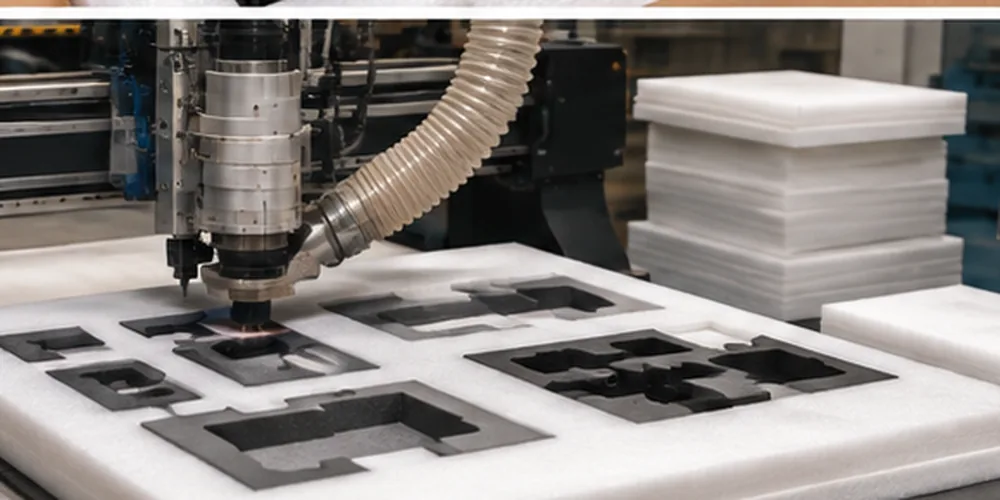
1. Define Product Fragility
Obtain shock limits from product testing, engineering data or a documented assumption approved by the responsible team. Identify fragile subassemblies and orientations.
2. Map The Distribution Route
Record parcel, LTL, air, ocean, courier, warehouse and manual-handling conditions. Include temperature range, stacking, vibration and expected reuse.
3. Model Product Mass And Center Of Gravity
The insert should support the product without creating unstable loading. Heavy components or an offset center of gravity can overload one pad during a drop.
4. Calculate Bearing Area
Use candidate cushion curves to find a suitable static-loading range. Then determine the total bearing area needed. Avoid making every visible surface a contact point if that moves the design outside the material’s useful loading range.
5. Select Thickness
Thickness must provide enough stopping distance without bottoming out. Use data for the selected grade, density, drop height and impact sequence.
6. Create Retention And Clearance
The product should not rattle, yet an overly tight cavity can preload the foam, scuff the surface or make removal difficult. Add manufacturing tolerances, product variation and suitable finger access.
7. Protect Edges And Protrusions
Sharp feet, switches, knobs and connectors can cut foam or concentrate force. Move the primary bearing surface to stronger product areas and add local clearance where needed.
8. Design The Outer Case
The carton must contain the foam without crushing it during normal stacking. Foam should not protrude into box seams or interfere with flaps. Packed external dimensions also affect storage and carrier charges.Use box measurement guide to separate product dimensions, internal fit dimensions and final external shipping dimensions.
9. Prototype The Insert
Build a physical sample from the proposed material and process. CAD alone does not show removal force, laminate appearance, surface marking or adhesive behavior. The article on 3D printing in packaging explains how printed models and tools can speed fit checks before production tooling.
10. Test The Complete Pack
Condition and test the product, foam, carton, tape and accessories together. Inspect both visible damage and hidden performance changes after the test sequence.
Foam Insert Geometry
End Caps
End caps suspend a product between two cushions and leave side clearance from the box. They are common for electronics, appliances and instruments. The caps must stay seated after repeated impacts.
Corner Blocks
Corner blocks can protect a product while using less foam than a full cavity. They need enough engagement to resist rotation and must support suitable structural areas.
Full-Cavity Inserts
A routed or waterjet-cut cavity can present the product and organize accessories. Large continuous contact areas may reduce static loading below the useful cushion range, so presentation geometry still needs shock analysis.
Layered Trays
Multiple layers can create pockets without deep routing. Align layers with pins, fixtures or controlled lamination. Misregistration can pinch a product or expose a hard step.
Floating Pads And Rails
Strategic pads or rails can support load-bearing zones while leaving fragile sections clear. This approach can reduce material but requires accurate product orientation.
Lid Pads
A lid pad can limit vertical movement or hold accessories. It should not place continuous damaging pressure on switches, glass or calibrated components.
Fabrication Methods
| Method | Suitable work | Main control point |
| Steel-rule die cutting | Flat profiles and repeat production | Edge quality, compression during cut and minimum spacing |
| CNC routing | Deep pockets, stepped cavities and thick planks | Tool path, dust, heat and corner radius |
| Waterjet cutting | Detailed through-cuts and prototypes | Water management, taper, part drying and nesting |
| Oscillating knife cutting | Sheets, profiles and digital short runs | Blade selection, depth and cut speed |
| Saw or band cutting | Blocks, pads and straight edges | Kerf, dust, accuracy and operator safety |
| Lamination | Thick blocks, contrasting layers and built-up cavities | Bond strength, flatness and layer alignment |
| Thermoforming | Selected cross-linked sheets and shaped parts | Grade response, tool temperature, thinning and springback |
The chosen process changes achievable tolerances and appearance. A routed cavity has tool-radius limits, while die-cut foam can show compression at the edge. State the approved process in the drawing so a supplier cannot silently substitute a different method.
Tolerances and Drawings
A foam drawing should specify:
- Material manufacturer and grade, or an approved equivalent process
- Cross-linked or non-cross-linked status
- Density and tolerance
- Color
- Overall dimensions and tolerances
- Cavity dimensions
- Thickness and laminate direction
- Critical radii
- Adhesive or film layers
- Surface and cleanliness requirements
- Static-control classification where needed
- Part orientation in the box
- Sampling and acceptance plan
Foam compresses during measurement, so the inspection method and contact pressure matter. Do not place paperboard-style tolerances on foam without confirming process capability.
Polyethylene Foam and Corrugated Boxes
The outer case distributes compression, blocks puncture and provides stacking structure. Foam manages shock and positioning. One cannot compensate for every weakness in the other.
Check:
- Clearance between foam and box walls
- Score and flap intrusion
- Insert movement during vibration
- Case compression under pallet load
- Hand-hole or access features
- Moisture exposure
- Product weight distribution
- Packing sequence
- Consumer removal
Current containerboard, converting and shipping-case developments can be followed through corrugated packaging news hub.
Electronics and ESD-Protective Foam
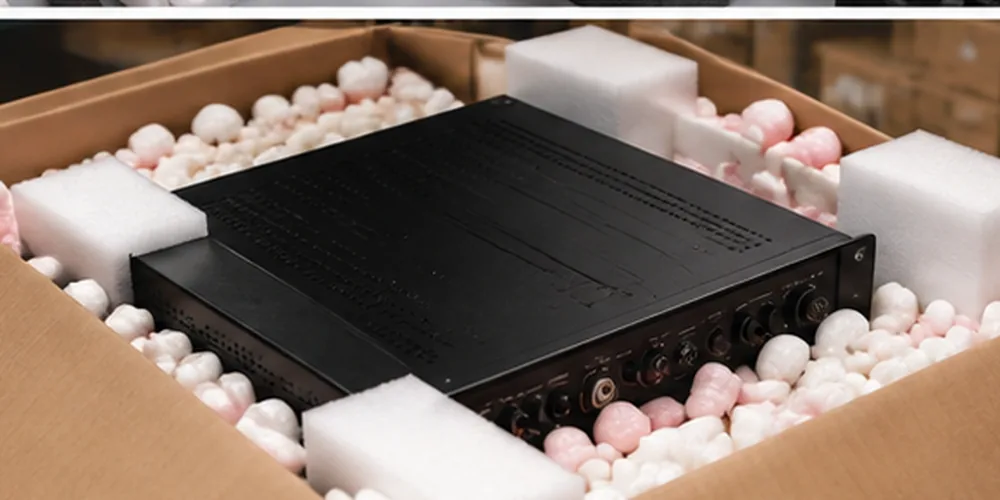
Standard PE foam can generate charge through contact and separation. Color does not prove protection. Pink often signals an anti-static grade and black may signal conductive material, but visual cues are not a specification.
Packaging for electrostatic-discharge-sensitive items may need:
- Low-charging contact surfaces
- Dissipative or conductive resistance range
- A grounding path within a controlled area
- Discharge shielding outside that area
- Humidity and aging stability
- Cleanliness and residue limits
- Verification after fabrication and adhesive application
The EOS/ESD Association explains that ANSI/ESD S541 defines packaging properties for ESD-sensitive items through production, transport and storage. A foam insert may provide cushioning and one electrical property without providing complete discharge shielding. Review the entire package.
Additives can migrate or lose effect over time. Test finished converted parts, not only virgin sheet, and define the conditioning period and measurement method.
Surface Protection, Cleanliness and Sensitive Products
Closed-cell PE foam is often selected for painted metal, glass, optics and polished assemblies because suitable grades can be clean and low abrasion. That does not mean every foam is safe for every surface.
Evaluate:
- Cell texture and cut edges
- Dust from routing or sawing
- Additive transfer
- Odor and volatile residue
- Color transfer
- Adhesive residue
- Pressure marks
- Long-term contact at high temperature
- Interaction with coatings, lenses or soft plastics
Use a contact-storage test for high-value surfaces. A short rub test may miss transfer that appears after weeks in a hot warehouse.
Moisture and Chemical Resistance
Predominantly closed cells give PE foam useful resistance to water and many chemicals. The finished package can still take in liquid through cut surfaces, holes, gaps, fabric coverings, laminate lines or an unsealed box.
Ask for grade-specific immersion or absorption data when water exposure matters. For chemical contact, test the exact fluid concentration, temperature, time and stress. “Chemical resistant” is too broad for approval.
Do not describe a foam insert as a moisture barrier unless the complete package has been tested for that role.
Temperature and Cold-Chain Use
Trapped gas and polymer structure can slow heat transfer, so PE foam may form part of an insulated shipper. Thermal performance depends on density, thickness, joints, lid fit, payload, refrigerant, ambient profile and pack-out procedure.
Protective foam is not a full cold-chain design by itself. Conduct a qualified thermal study for the intended route and duration. Repeated freezing and thawing can also affect adhesive layers, labels and the outer carton.
Printing and Branding on Polyethylene Foam
PE has low surface energy, which can make ink and adhesive bonding difficult. Foam also compresses under a print head, flexes during handling and exposes cells after cutting. Branding method should be selected with the foam converter.
Possible approaches include:
- Screen printing on flat fine-cell surfaces
- Pad printing for selected shapes
- Qualified inkjet systems
- Printed or laminated top films
- Pressure-sensitive labels
- Laser or routed marking on compatible grades
- Contrasting laminated layers revealed by cutting or engraving
Print Controls
Confirm:
- Surface treatment or primer
- Ink compatibility
- Cure conditions
- Compression during printing
- Rub and abrasion resistance
- Flex and recovery after print
- Color on the actual foam
- Odor and residue
- Product-contact restrictions
- Heat sensitivity during transfer or curing
White ink may be needed on dark foam, while porous or textured cells can break fine lines. Keep legal copy and barcodes on a stable printed component unless the foam printing process has been verified for legibility and scanning.
Packaging NextGen advises approving a marked foam part after fabrication, not a flat ink drawdown alone. Cutting, washing, lamination and handling can change print adhesion.
Polyethylene Foam vs Other Packaging Materials
| Material | Cell or structure | Best starting role | Main limit to examine |
| Polyethylene foam | Mostly closed-cell | Repeated cushioning, blocking, bracing, surface protection and inserts | Collection access, density selection and material volume |
| Polyurethane foam | Often open-cell in packaging | Soft presentation, light products and gentle contact | Moisture uptake, compression set and durability |
| EVA foam | Closed-cell copolymer | Dense presentation inserts, cases and repeated handling | Weight, cost and stiffness for the load |
| EPS | Molded bead foam | Lightweight high-volume end caps and thermal shippers | Brittleness, tooling and local collection |
| EPP | Molded bead polyolefin | Reusable molded cushioning and repeated impacts | Tooling and supplier capability |
| Molded pulp | Fiber structure | Formed inserts and consumer-facing paper systems | Dust, moisture, surface abrasion and tooling |
| Corrugated fitments | Folded paperboard or corrugated | Dividers, cells, braces and low-material shipping systems | Complex shock needs and moisture exposure |
The guide to processed molded pulp packaging provides a deeper fiber-insert comparison. Paperboard grade and caliper also matter when replacing foam with folded fitments, as explained in paperboard grades for packaging.
Polyethylene Foam vs Polyurethane Foam
Polyethylene foam is commonly closed-cell, firmer and more resistant to water uptake. It often suits heavier products, blocking, bracing and reusable transport cases. Packaging polyurethane is commonly open-cell and softer, making it useful for gentle contact and presentation.
Neither material is automatically better. A soft PU insert can bottom out under a heavy product, while a stiff PE insert can transmit excessive shock into a light item. Compare cushioning data, recovery, surface, moisture, cleanliness, cost and disposal for the exact grade.
Polyethylene Foam vs Molded Pulp
PE foam can offer repeat cushioning, fine fabrication and water resistance. Molded pulp can provide a fiber-based consumer presentation and may fit established paper-recovery systems where local rules accept the finished insert.
The comparison should cover:
- Product fragility
- Required number of drops
- Surface sensitivity
- Moisture
- Tooling and volume
- Insert mass and cube
- Packing labor
- Consumer instructions
- Actual recovery access
A material change should pass the same packaged-product test sequence. Similar cavity shape does not mean similar shock response.
Packaging NextGen treats a foam-to-fiber change as a package redesign rather than a direct material substitution, because contact area, stiffness, recovery and impact response all change.
Common PE Foam Insert Mistakes
Selecting By Touch
Hand feel cannot show dynamic impact performance. Use material data and packaged-product trials.
Treating Density As A Load Rating
Density is mass per volume. Static loading and cushion curves connect the product to the foam.
Adding Too Much Bearing Area
More contact area lowers static loading and may keep the foam from compressing enough during impact.
Ignoring Bottoming Out
Foam that fully compresses loses its available stopping distance and can transmit a severe shock.
Using A Perfect Cad Fit
Zero-clearance cavities can preload foam, mark surfaces and make the product hard to remove. Include tolerance and finger access.
Forgetting Heavy Subassemblies
Center of gravity and local mass can overload one cushion during a corner or edge drop.
Assuming Pink Means Safe For Electronics
Electrical properties and shielding must be specified and verified across the full package.
Calling The Part Waterproof
Closed cells resist rapid uptake, but cuts, holes, joints and the outer package create paths for liquid.
Skipping Adhesive Aging
Pads can shift after heat, time or repeated handling. Test peel and shear on the real substrates.
Testing Foam Without The Box
Case deformation and insert movement change the impact response. Test the complete pack.
Packaging Test Plan
A practical validation plan may include:
- Material identity, density and dimensions
- Visual inspection of cells and laminations
- Compression response and set
- Cushion-curve review
- Prototype fit and removal
- Conditioned drop tests
- Vibration testing
- Compression or stacking
- Temperature and humidity exposure
- Surface-contact and abrasion checks
- ESD verification where relevant
- Reuse cycles
- Final dimensional and product inspection
Use a test sequence suited to the distribution system. Passing one flat drop does not establish performance during vibration, corner impacts or stacking.
Cost Analysis
Foam price per board foot or cubic foot does not show total packaging cost. Include:
- Raw foam volume
- Sheet or plank yield
- Fabrication time
- Tooling and programming
- Scrap and nesting
- Lamination
- Adhesive and coverings
- Packing labor
- Outer-box size
- Dimensional shipping charges
- Damage and return cost
- Reuse cycles
- Collection or disposal program
A denser or finer-cell foam may allow a smaller part, but only test data can confirm a material reduction. A low-price insert that expands the box may cost more through shipping cube.
Reuse, Recycling and Environmental Claims
Polyethylene foam can often survive several handling cycles when the grade and insert are designed for reuse. A reusable claim should still define the loop, return rate, inspection and retirement rule.
Some PE foam can be processed in qualified LDPE recovery systems, but acceptance is limited and varies by location. Adhesives, labels, dirt, cross-linking, color and mixed materials can affect the route. Sealed Air notes that its PE foams require an appropriate LDPE recycling system and tells users to check local rules.Before printing a claim:
- Identify the exact material and additives
- Verify collection access for the target market
- Confirm the processor accepts foam, not only film or rigid PE
- State recycled content accurately
- Keep evidence for mass-balance or certified claims
- Provide preparation instructions only when users can reasonably follow them
- Review changing state labeling rules
Reduction should begin with protection efficiency. A smaller insert that causes product damage can shift more material and carbon into replacement products and shipping.
Procurement Specification Checklist
Before ordering PE foam packaging, confirm:
- Manufacturer and grade
- EPE, non-cross-linked, XLPE or IXPE description
- Density and tolerance
- Thickness and dimensional tolerances
- Cell and surface expectations
- Color and color tolerance
- Cushioning data for the design condition
- Compression and creep requirements
- Water-absorption or chemical data where needed
- Temperature range
- Static-control properties and test methods
- Cleanliness, odor and surface-contact limits
- Fabrication and lamination method
- Adhesive or printed layers
- Part drawing and orientation
- Packaging and storage of the foam parts
- Incoming inspection plan
- Change-notification requirement
- Packaged-product test plan
- Environmental-claim evidence
Final Guidance
Polyethylene foam protects products through controlled compression, not by occupying as much space as possible. Start with product fragility and distribution hazards, use grade-specific cushion data, calculate bearing area, set thickness, design the insert and outer case together, and validate the packed product.
Packaging NextGen recommends keeping the foam grade, density tolerance, drawing, cushion data, converted-part approval, box specification and test report in one controlled record. That file makes supplier changes and future cost reductions easier to evaluate.
Frequently Asked Questions
What Is Polyethylene Foam Used For In Packaging?
Polyethylene foam is used for cushioning, blocking, bracing, interleaving, surface protection, corner protection, thermal resistance and custom inserts. It is supplied as rolls, sheets, planks, profiles, pouches and fabricated parts.
Is Polyethylene Foam Open Cell Or Closed Cell?
Most packaging-grade polyethylene foam has a predominantly closed-cell structure. The cells are separated, which limits rapid water and air movement. Cut surfaces and holes still expose cells, so finished-pack performance should be tested.
What Is Epe Foam?
EPE means expanded polyethylene foam. The name can cover different expanded PE structures across suppliers. A commercial specification should also state whether it is cross-linked, its grade, density, thickness, tolerances and cushioning data.
What Is Xlpe Foam?
XLPE is cross-linked polyethylene foam. Cross-linking creates a polymer network and commonly supports fine cells, a smooth surface and dimensional consistency. It is often used for precise or presentation-focused packaging inserts.
Is Epe The Same As Xlpe?
Not necessarily. EPE is a broad expanded-polyethylene term, while XLPE specifically states that the polymer is cross-linked. Some sellers use abbreviations loosely, so verify the manufacturing route and grade data.
What Density Polyethylene Foam Is Best For Packaging?
There is no universal best density. Selection depends on product fragility, weight, bearing area, drop height, foam thickness and repeated impacts. Use the cushioning curve for the exact grade and test the complete package.
How Thick Should A Polyethylene Foam Insert Be?
Thickness must provide enough stopping distance without bottoming out. It is chosen from the product’s G limit, expected drop height, static loading and grade-specific cushioning curve. A generic thickness chart cannot approve a pack.
Is Higher-Density Foam Better For Heavy Products?
Higher-density foam may suit higher static loads, but it can be too stiff and transmit shock when loading is low. The product, area, thickness and cushion curve must be evaluated together.
Is Polyethylene Foam Waterproof?
The material usually resists water uptake because of its closed cells, but a fabricated insert is not automatically waterproof. Cuts, holes, laminate seams, adhesives and the outer box can allow water entry.
Is Polyethylene Foam Recyclable?
Some grades can be processed in appropriate polyethylene recovery systems, but curbside access is uncommon and cross-linking, contamination or mixed layers can change acceptance. Verify a package-specific local route before making a claim.
Can Polyethylene Foam Be Printed?
Yes, selected grades can receive screen, pad, inkjet, laminated-film, label or engraved branding. Low surface energy and compression make adhesion difficult, so surface treatment, ink, cure, rub and product contact should be tested.
Is Pink Polyethylene Foam Safe For Electronics?
Color alone does not prove ESD protection. The package may need low-charging, dissipative or conductive properties plus discharge shielding. Specify measurable limits and verify the complete package under the applicable ESD standard.
What Is The Difference Between Polyethylene And Polyurethane Packaging Foam?
PE foam is commonly closed-cell, firmer and moisture resistant. Packaging PU foam is commonly open-cell, softer and more compressible. Neither is always better; compare cushioning, recovery, surface contact, environment and cost for the exact product.
How Are Custom Polyethylene Foam Inserts Made?
Converters use die cutting, CNC routing, waterjet, oscillating knives, sawing, lamination and selected forming processes. Geometry, tolerance, surface finish, volume and tooling budget determine the best process.