
Corrugated packaging news can sound remote until a mill closure changes a board quote, a new inkjet press shortens a launch schedule, or an e-commerce rule forces a box redesign. For brand owners, these are not background headlines; they affect material availability, print choices, product protection and the price paid for every shipped unit. Packaging NextGen tracks those connections so readers can move from “what happened?” to “what should we check next?” without treating every announcement as a reason to rewrite an approved specification.
Corrugated Packaging News In 2026: The Short Answer
The central story in 2026 is adjustment. North American containerboard output has fallen alongside capacity reductions, yet operating rates have remained relatively steady. Producers have also announced large price increases despite soft demand, making the difference between an announced increase and a realized transaction price especially important. At the same time, single-pass digital printing, automated converting and ship-in-product-packaging programs are pushing boxes to do more work as both transport packs and brand media.
For buyers, the practical response is to protect optionality. Qualify an alternate board combination, confirm print tolerances before approving artwork, measure the packed box rather than relying on a catalog size, and review regulations in every market where the pack will be sold. Packaging NextGen recommends linking each news item to a documented packaging decision instead of reacting to headlines alone.
What is Corrugated Packaging?
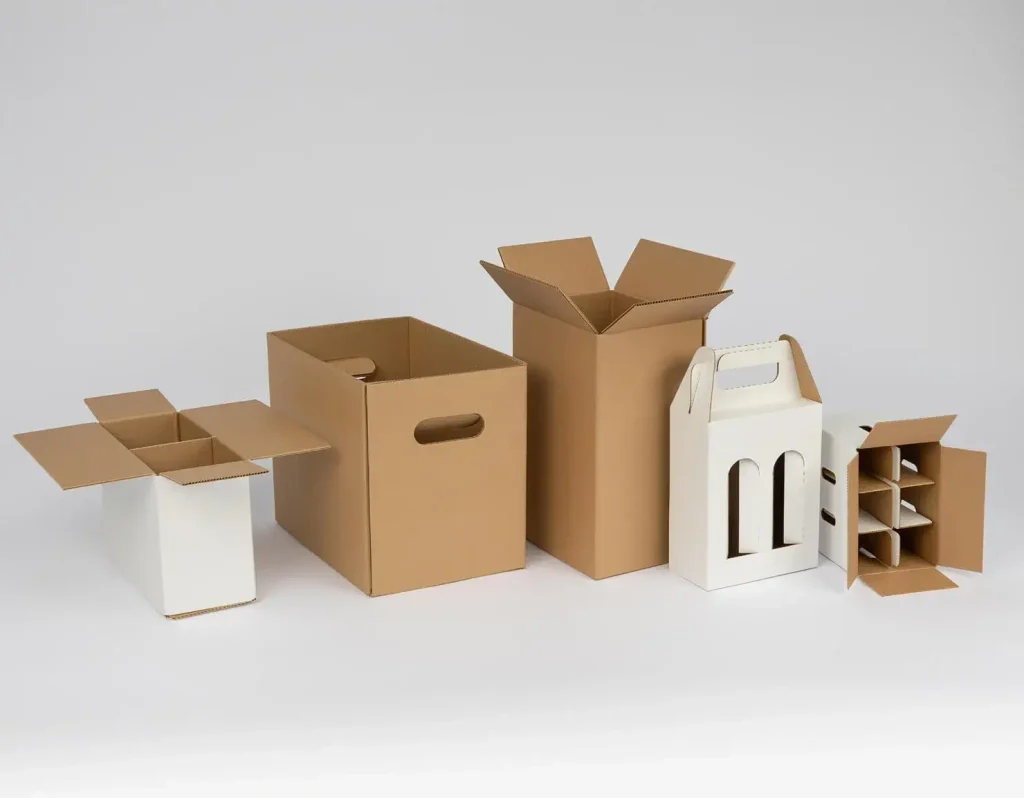
Corrugated board is made by bonding one or more fluted paper mediums between flat linerboards. The flutes create spacing that contributes cushioning, stacking strength and rigidity without making the pack a solid block of fiber. A single-wall board normally has two liners and one fluted medium; double-wall and triple-wall constructions add more layers for demanding loads or distribution conditions.
Corrugated board is not the same as the flat paperboard commonly used for folding cartons. Both are fiber-based materials, but their structures, converting methods and performance tests differ. Readers comparing carton stocks can review this guide to paperboard grades for packaging while keeping corrugated liner and medium specifications separate.
The phrase “cardboard box” is common in everyday speech, but a technical order needs clearer language. Board grade, flute profile, wall construction, edge crush strength, moisture conditions, dimensions, style, joints, printing and coatings can all change the result.
Containerboard Output and Capacity Set The Market Context
The American Forest & Paper Association reported that U.S. containerboard production fell 4.4% in 2025 to 36.1 million tons, while containerboard capacity declined 5.1%. The reported 2025 operating rate was 91.9%. In the first quarter of 2026, total containerboard production was down 8% from the same quarter a year earlier, export shipments were down 19%, and ending mill inventories were 3% below the end of the fourth quarter of 2025.
Those figures describe different periods and should not be blended into one trend line without labels:
| Measure | Reported change or level | Period |
| U.S. containerboard production | 36.1 million tons; down 4.4% | Full year 2025 |
| U.S. containerboard capacity | Down 5.1% | Full year 2025 |
| Containerboard operating rate | 91.9% | Full year 2025 |
| Total containerboard production | Down 8% year over year | Q1 2026 |
| Export shipments | Down 19% year over year | Q1 2026 |
| Mill inventories | Down 3% from Q4 2025 | End of Q1 2026 |
The first lesson is that weaker output does not automatically prove a shortage. Production can fall because demand is lower, capacity has been removed, mills are taking downtime, exports have shifted or several of those conditions are happening together. The nearly unchanged first-quarter operating rate reported by AF&PA supports the need for a careful reading: output fell broadly in line with capacity changes.
The second lesson is local. A national total cannot tell a buyer whether a particular recycled liner, white-top liner, wet-strength grade or flute combination is readily available from a nearby converter. Freight distance, machine capability, minimum runs and approved-paper lists can matter as much as headline capacity.
What Packaging Buyers Should Do
- Ask converters how long a quote remains valid and which inputs can trigger a revision.
- List acceptable alternate board combinations before supply becomes urgent.
- Require approval before a supplier changes the paper source or board construction.
- Retest compression, print and packing performance after a material change.
- Separate mill data from converter lead-time data; they answer different questions.
Announced Containerboard Increases Do Not Equal The Final Box-Price Change
Containerboard pricing has been a major part of corrugated packaging industry news in 2026. Packaging Corporation of America announced a $70-per-ton increase effective March 1, and International Paper followed with an increase of the same amount, according to Packaging Dive. Later, PCA announced a $140-per-ton increase effective September 1.
These are announced producer actions, not proof that every buyer paid the full amount. The final effect on a box quote can differ by contract, grade, region, order pattern, freight, converter inventory and negotiation. A finished corrugated case also includes conversion labor, ink, tooling, adhesives, waste, warehousing and delivery. A percentage change in containerboard therefore should not be copied directly onto the total box price without a cost explanation.
When a converter sends a price notice, ask for:
- the affected grade and effective date;
- whether the change applies to board, conversion, freight or several components;
- the baseline used for comparison;
- treatment of existing purchase orders and stock agreements;
- options to reduce board area, ink coverage, waste or freight without weakening the pack.
A responsible value analysis protects the product first. Removing fiber can reduce cost, but an under-specified box may fail in compression, absorb moisture, bulge on a pallet or produce more damaged goods. The lowest unit quote can be the most expensive choice after returns, repacking and labor are counted.
Digital Print is Changing Corrugated Graphics and Run Planning
Digital corrugated printing continues to move from sampling and display work into more production settings. BHS Corrugated announced NextGraphX in January 2026, a concept combining a corrugator with BHS single-pass inkjet technology and positioning digital preprint as an alternative to litho-lamination for some high-graphics work. Its quality, lead-time, cost and environmental statements are supplier claims that buyers should validate on their own art, board and run profile.
The important point is not that one print process has won. Corrugated print jobs have different economics:
| Print route | Often fits | Check before approval |
| Flexographic direct print | Repeated production, line work, solid colors and many shipping cases | Plate cost, dot gain, registration, flute show-through and ink holdout |
| Single-pass digital print | Multiple versions, shorter campaigns, variable data and faster artwork changes | Ink cost, color consistency, white ink needs, board pretreatment and rub resistance |
| Litho-laminated corrugated | Detailed retail graphics and high-resolution imagery | Lamination tolerance, cracking, extra material steps, lead time and recyclability claims |
| Preprinted liner | Long runs with repeat graphics | Forecast accuracy, roll inventory, corrugator scheduling and obsolete stock risk |
Digital printing can reduce plates and version-change waste, but it is not automatically the lower-impact option for every job. Ink chemistry, drying energy, rejected sheets, transport, board coating and order quantity should be considered together. The useful comparison is a job-specific total, not a broad claim about one technology.
Artwork Must Respect Corrugated Board Behavior
Corrugated is not a perfectly flat coated sheet. Liner shade, recycled-fiber content, surface absorption and the flute pattern can alter color and fine detail. Heavy ink coverage may reveal washboarding, while tiny reverse type may fill in. Barcodes and QR codes need quiet zones, contrast and verification on production material—not only on a monitor.
Before print approval, teams should align artwork with the box structure. A correct packaging dieline shows cut lines, scores, glue areas, panels, bleed and safe zones. For stakeholder reviews, a 3D mockup can reveal a logo crossing a score or landing under a flap; this Pacdora review for packaging mockups explains where browser-based previews can help and where a physical sample is still needed.
Converting Lines Are Becoming More Connected and Automated
Corrugated printing is only one stage. Sheets still need to be fed, printed, creased, cut, stripped, folded, glued, counted, stacked and inspected. Equipment announcements in 2026 continue to emphasize faster changeovers, camera inspection, digital setup, robotic handling and connected production data.
For example, Koenig & Bauer reported that Morrisette Packaging invested in an eight-color ChromaCUT rotary die cutter and an Omega Magnus folder-gluer, with the ChromaCUT scheduled for April 2026. The release presents this as the first North American installation of both platforms. For a packaging buyer, the equipment name matters less than the measurable outcome a converter can hold across the order.
Useful questions include:
- What registration tolerance is guaranteed at the planned speed?
- How are print defects, missing blanks and glue placement inspected?
- Can the line capture job records for repeat orders?
- What is the minimum economical quantity after setup and tooling?
- Can the converter isolate and trace nonconforming production?
- Does stacking or strapping mark high-coverage graphics?
Automation may reduce variation, but a fast line cannot correct a weak file, an unsuitable liner or an untested crease pattern. Quality starts with an agreed specification and an approved sample.
E-Commerce Boxes Are Becoming Both Package and Storefront
Direct-to-consumer shipping has changed what a corrugated box is expected to do. A shipper may need to survive parcel handling, carry a scannable code, reduce unused space, open cleanly, support returns and communicate a brand message without a second outer box.
Amazon’s Ships in Product Packaging program allows qualifying products to travel in their own tested packaging without added Amazon packing material. Amazon currently describes per-unit fulfillment discounts for certified items and sets separate eligibility, testing and labeling requirements. Sellers should check the current program rules for their marketplace and product category rather than designing from a promotional summary alone.
The design implications are practical:
- Eliminate avoidable empty space while leaving enough clearance for packing and product movement.
- Keep labels and codes on flat, scannable panels away from seams and edges.
- Plan tamper evidence and opening instructions without creating excessive fiber tears.
- Test closure methods under temperature, dust and humidity conditions.
- Consider whether the original box can support a customer return.
- Avoid placing important copy where shipping labels will cover it.
Dimensions must also be defined correctly. Internal dimensions support product fit and inserts; maximum packed external dimensions support freight, storage and carrier calculations. This guide explains how to measure a box in length × width × height order and why the measurement type must be recorded.
Regulation is Shifting The Corrugated Design Brief
The European Union’s Packaging and Packaging Waste Regulation entered into force on February 11, 2025, and applies from August 12, 2026. It sets a wider framework for recyclability, packaging minimization, recycled content in certain plastic packaging, labeling, reuse and producer obligations. The regulation’s requirements phase in over time, so “PPWR compliant” should never be treated as a single undated checkbox.
Corrugated packs may benefit from established paper collection systems, but fiber content alone does not settle compliance or recyclability. Coatings, plastic windows, tapes, labels, barrier layers, metallic effects, adhesives and food contamination may affect the actual recovery route. Exporters need to map the package component by component and confirm the rules, delegated acts and local collection conditions that apply to the sale date and destination.
Paper Substitution Needs Evidence, Not Assumptions
Replacing a plastic part with paper or corrugated board can reduce plastic use, yet the new pack may require a barrier coating, more material or a different recovery process. A fair comparison considers product protection, total material mass, sourced fiber, coatings, transport, food waste and the recycling system likely to receive the package.
Fiber formats can also work together. A corrugated outer case may use molded fiber for cushioning instead of a loose plastic insert when testing supports the change. This guide to processed molded pulp packaging covers material and design considerations for that adjacent format.
Structural Specification Still Decides Whether The Box Works
News about machines and materials can distract from the core engineering question: will the pack protect the product through its real distribution cycle?
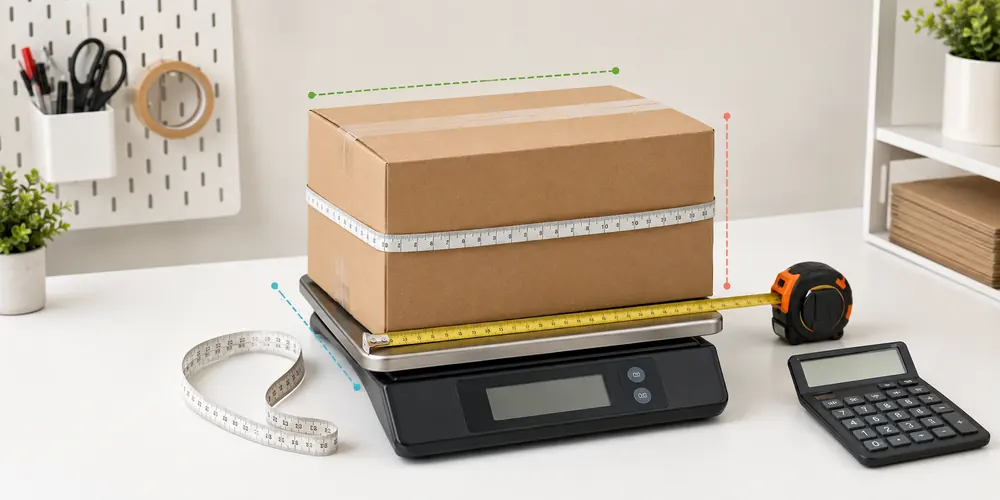
Start with the product’s weight, dimensions, fragility, center of gravity and sensitivity to moisture. Then map packing orientation, stacking pattern, pallet overhang, warehouse time, climate, transport vibration, drops and parcel handling. A board combination can only be judged against that use case.
Ect and Burst Strength Answer Different Questions
Edge Crush Test, or ECT, measures edgewise compression resistance of corrugated board and helps inform stacking analysis. The Mullen burst test measures resistance to rupture under hydraulic pressure. They are not interchangeable descriptions of overall box quality, and neither one alone predicts every field failure.
Box compression depends on more than the board certificate. Dimensions, panel perimeter, score quality, slots, hand holes, print coverage, humidity, storage time, pallet pattern and load alignment all matter. A converter may use a box-compression estimate during design, but physical testing under relevant conditioning gives stronger evidence.
Packaging NextGen advises buyers to lock the following details in the purchase specification:
- finished internal dimensions and tolerance;
- style code or drawing revision;
- flute and wall construction;
- liner and medium requirements or approved equivalents;
- ECT, burst or other agreed performance values;
- joint type and adhesive or stitch requirements;
- print colors, standards and acceptable variation;
- coating, tape, label and closure details;
- packing quantity, pallet pattern and moisture protection;
- sampling, inspection and change-control rules.
For unusual inserts or fit checks, rapid models can reduce late structural changes. These examples of 3D printing in packaging development show how prototypes can support fit and handling reviews before production tooling is committed.
What 2026 Trends Mean For Packaging Printing Teams
The year’s corrugated packaging news points toward more versions, shorter planning cycles and higher expectations for print control. That does not mean every case needs photo-quality graphics. The print brief should match where the box will be seen and what the ink must accomplish.
1. Separate Transport Information From Campaign Artwork
Product codes, handling marks, barcodes and regulatory text may need longer life than a seasonal campaign. Keeping stable and variable elements distinct can lower obsolescence risk. Digital printing may help with versioning, while a common flexographic plate set may remain economical for repeated base graphics.
2. Set Color Expectations On The Real Liner
A screen proof cannot simulate every interaction among liner shade, surface absorption, ink film and flute profile. Approve drawdowns or press samples on the specified material. Define whether the color reference is a spot standard, measured target or visually approved master, and agree on the viewing condition.
3. Test Codes After Converting
A barcode that scans on a flat proof may fail after corrugating, folding, varnishing or abrasion. Verify codes on finished production samples from the intended print direction. Keep codes away from crushed edges, folds, curved panels and areas likely to receive labels.
4. Control Artwork Revisions
File names such as “final-new-2” do not provide reliable version control. Use a drawing number, artwork revision, approval date and signed proof. Confirm that the structural file and graphic file share the same revision before plates, dies or digital production are released.
5. Review Sustainability Language
Claims such as “recyclable,” “plastic-free” or “made with recycled content” require evidence and market-specific review. A corrugated base does not make every attached coating, window, label or closure acceptable in every recycling stream. Keep supplier documentation and claim substantiation with the job record.
A Buyer’s Response Plan For The Next Corrugated Update
Packaging NextGen uses a simple decision sequence to keep market news from turning into rushed specification changes:
- Classify the update. is it official production data, a price announcement, a regulation, a machine launch or a company claim?
- Check exposure. Identify the SKUs, board grades, suppliers, regions and order dates that may be affected.
- Request evidence. Ask for a revised quote, material certificate, print sample, test report or legal reference as appropriate.
- Compare options. Model total packed cost, not only the price per box.
- Test the change. Use samples, line trials and distribution testing before a broad release.
- Approve and record. Update drawings, artwork, specifications and approved-supplier records.
- Monitor results. Track damage, packing time, scan failures, returns and customer feedback after rollout.
This sequence is especially useful when a supplier proposes down-gauging, a new paper source or a print-process change in response to market conditions.
How To Evaluate A Corrugated Supplier In 2026
A capable supplier should be able to explain both equipment and process control in plain terms. During sourcing, ask for evidence across five areas.
Material Control
Confirm paper sources, incoming checks, board-combination records, moisture management and the process for approving substitutions. If recycled content is important, define the claim, calculation method and documentation required.
Structural Development
Review design software, sample-making capability, compression testing, transit-test access and experience with the intended distribution channel. A supplier should be willing to explain the assumptions behind a proposed grade.
Print Control
Check press type, color measurement, plate or digital-file workflow, barcode verification and procedures for first-article approval. Ask how the plant controls changes in liner shade and absorbency.
Converting and Inspection
Discuss die maintenance, crease control, glue inspection, camera systems, reject handling and traceability. Machine speed is less valuable than repeatable output within agreed tolerances.
Business Continuity
Ask about alternate plants, approved paper options, outage communication, lead-time reporting and ownership of dies and plates. Market context also matters; this overview of Graphic Packaging International can help readers understand how large packaging groups describe their operations and market position, although any supplier decision should rely on current, direct evidence.
Editorial Strategy For Ongoing Corrugated Packaging Coverage
This page should be updated, not abandoned after publication. A practical schedule is:
- Monthly: check for material price announcements, mill changes, major equipment launches and regulatory dates.
- Quarterly: add official production data and revise the buyer implications.
- Twice yearly: review print, automation and e-commerce program sections.
- Annually: update the title year, opening summary, tables, FAQ answers and publication notes while retaining the same URL.
Future supporting articles can cover containerboard pricing, digital versus flexographic printing, flute profiles, ECT versus burst testing, e-commerce certification and PPWR design checks. Each supporting page should answer a narrower question and link back to this industry-update hub. Avoid creating several thin pages that repeat the same market summary.
Frequently Asked Questions
What is The Biggest Corrugated Packaging Trend In 2026?
There is no single trend for every buyer. The clearest combination is lower North American containerboard output and capacity, announced producer price increases, wider interest in digital print, more converting automation, and stricter attention to packaging waste rules. The effect depends on grade, region, run length and sales channel.
Are Corrugated Box Prices Increasing In 2026?
Major North American producers have announced containerboard increases during 2026, but an announcement is not the same as the final price paid for every box. Contract terms, grade, freight, converter costs and negotiation determine the finished-price effect. Ask suppliers to separate material, conversion and logistics drivers.
is Corrugated Packaging The Same As Cardboard?
“Cardboard” is an informal umbrella term. Corrugated board contains fluted medium bonded to linerboard, while paperboard used for folding cartons is generally a flat, non-fluted sheet. Technical orders should state the exact board structure rather than rely on the word cardboard.
is Digital Printing Better Than Flexographic Printing For Corrugated Boxes?
It depends on the job. Digital printing often suits multiple versions, variable data and shorter campaigns. Flexographic printing can be economical for repeated production and simpler graphics. Compare run quantity, colors, substrate, quality target, setup cost, waste and delivery time.
What is Containerboard?
Containerboard is the paper-based material used to make corrugated board. It includes linerboard for flat facings and corrugating medium that is formed into flutes. Different paper combinations influence strength, appearance, print response and cost.
Does Lower Containerboard Production Mean Boxes Will Be Unavailable?
Not automatically. Output may fall alongside demand and capacity. Availability can also vary by grade, region, converter inventory and machine schedule. Buyers should ask suppliers for grade-specific lead times and qualify alternatives where disruption would be costly.
is Every Corrugated Box Recyclable?
Many clean corrugated boxes are widely collected, but “every” is too broad. Wax, polymer barriers, food residue, labels, tapes and mixed-material parts can affect acceptance. Check the complete package against the collection and recycling system in the target market.
Which Corrugated Box Test Should A Buyer Request?
The test plan should match the risk. ECT can inform stacking performance, while burst testing measures rupture resistance. Box compression, drop, vibration, moisture conditioning, Cobb, puncture and print-rub tests may also be relevant. A qualified packaging engineer or lab can set a protocol for the distribution cycle.
How Often Should A Corrugated Packaging News Page Be Updated?
Review headlines monthly and official market data quarterly. Make a dated revision whenever a price announcement, regulation, capacity change or technology update materially changes buyer guidance. An old publication date with no visible review process weakens trust.
Can A Brand Ship A Product Without An Extra E-Commerce Box?
Sometimes. Programs such as Amazon Ships in Product Packaging permit qualifying products to ship in their own tested packaging. Certification, dimensions, labeling, protection and market rules apply, so the pack needs to be designed and tested for that distribution route.
Final Takeaway
The most useful corrugated packaging news does more than report a mill statistic or repeat an equipment launch. It separates confirmed data from announced actions, explains the effect on material, printing and box design, and gives buyers a safe next step. In 2026, that means watching containerboard capacity and price efforts while improving specification control, print verification, right-sizing and regulatory review. Packaging NextGen will get the strongest search and reader value from keeping this page current, adding first-hand evidence and answering the packaging decision behind every headline.